Choosing a circuit board fabrication supplier in 2026 means looking beyond price and glossy capability charts. Buyers need to match a supplier’s process to the board’s actual demands: layer count, copper weight, controlled impedance, material choice, and expected production volume. A prototype with simple geometry has different needs from a dense multilayer board built for repeat production.
This worldwide guide introduces leading suppliers and the capabilities buyers should verify. It considers engineering support, fabrication options, inspection practices, communication, and delivery performance. Ask how a factory handles design questions, verifies stack-ups, and reports defects. A clear answer is more useful than a broad promise. Small details matter. So does the sample report.
No supplier is best for every project. Regional logistics, order size, technical requirements, and changing capacity can shift the right choice. Even published certifications and equipment lists deserve current confirmation; they do not guarantee a smooth build. Compare recent references, request a quote against the same files, and review the supplier’s documented quality process. Rankings can help narrow the field, but they are not a substitute for due diligence. Some comparisons remain imperfect, especially when public data is limited. That is worth acknowledging. The goal is a dependable manufacturing partner, not a perfect score on paper.

2026 Top Circuit Board Fabrication Suppliers Worldwide
Circuit Board Fabrication: Processes, Materials, and Supplier Roles
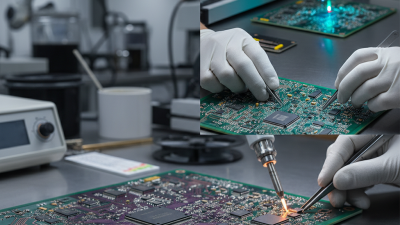
Circuit board fabrication turns a designed layout into a physical board through imaging, etching, drilling, plating, and finishing. Each stage affects whether copper traces remain clear and electrical connections stay reliable. A thin laminate panel may need precise drilling before copper is deposited inside its holes. Small process variations matter. They can change a board’s performance.
Materials shape the fabrication choices. Common options include glass-reinforced epoxy laminates, copper foil, and specialty materials for demanding thermal or signal needs. Suppliers help customers match these materials with layer counts, board thickness, trace widths, and production volumes. Their roles can also include design-for-manufacturing reviews, prototype runs, inspection records, and delivery planning. A capable supplier should explain process limits, not just accept every specification. Some project details are easy to overlook, even with careful review.
Tips: Share fabrication files, layer stack-up, expected quantities, and operating conditions early. Ask how the supplier checks drilled holes, copper thickness, and finished dimensions. Request a sample or inspection report when practical. Keep communication specific. A rushed review can miss a costly mismatch.

In 2026, evaluating global circuit board fabrication suppliers means looking beyond quoted price and advertised capability. Compare suppliers using the same board files, stack-up, quantities, and delivery assumptions. Review their process controls for layer registration, drilled-hole quality, copper thickness, and impedance. Ask for recent inspection records and material traceability details. A polished capability sheet is useful, but it cannot replace evidence from comparable production work.
Capacity and delivery resilience matter, too. Discuss how the supplier handles engineering questions, production changes, and unexpected material delays. A clear response, supported by specific process data, is more informative than a quick promise. Where possible, assess sample boards or a first production run against agreed acceptance criteria. No scorecard captures every risk. A low defect rate may hide limited capacity, while a slower response may reflect a careful technical review. Evaluation still requires judgment.
Tips: Send one consistent test package to each candidate. Include drawings, tolerances, and inspection expectations. Check cross-sections for plated-hole quality and layer alignment. Record response times and unresolved questions. Keep notes brief and factual. Then review the results with your engineering team; the “best” supplier may depend on the board’s actual demands.
Supplier evaluation framework for comparing PCB fabrication capabilities worldwide. The criteria below identify verifiable evidence and comparable measures; they do not represent a ranked list or supplier-specific results.
| Evaluation Dimension | What to Verify | Comparable Measure | Suggested Evidence |
|---|---|---|---|
| Quality management | Whether the manufacturing site operates a documented quality management system and maintains relevant, valid certifications. | Certification scope, issuing body, site covered, and expiry date; for example, ISO 9001 certification. | Current certificate and site-specific scope documentation. |
| Product and process qualification | Whether the supplier can manufacture and inspect boards to the applicable performance and acceptance requirements. | Applicable IPC specifications, such as IPC-6012 for rigid printed boards or IPC-6013 for flexible and rigid-flex printed boards; acceptance criteria agreed for each order. | Purchase specification, qualification report, and inspection records. |
| Manufacturing capability | Whether the facility can produce the required board construction, layer count, materials, feature sizes, and interconnect technology. | Documented capability limits for layer count, finished board thickness, copper weight, trace and space, hole size, and via types. | Current capability statement and a design-specific manufacturability review. |
| Electrical performance | Whether controlled-impedance and other electrical requirements are designed, fabricated, and tested as specified. | Impedance target and tolerance, test method, test-coupon plan, and continuity or isolation test coverage. | Stack-up proposal, impedance report, and electrical test report. |
| Production quality results | How consistently the supplier meets agreed acceptance requirements and handles nonconforming product. | First-pass yield, defect rate (for example, DPPM where consistently defined), customer returns, and corrective-action closure time. | Time-period-defined quality reports and corrective-action records. |
| Delivery performance | Whether quoted production schedules are realistic and orders arrive when committed. | On-time delivery rate, quoted versus actual lead time, and the stated start and end points used to calculate lead time. | Order history or a time-period-defined delivery performance report. |
| Traceability and change control | Whether materials, process lots, revisions, and production records can be traced and controlled. | Lot-level traceability coverage, record-retention period, revision control, and notification process for material or process changes. | Sample travelers, certificates of conformance, and change-control procedure. |
| Regulatory and environmental compliance | Whether products and manufacturing operations meet the buyer’s applicable legal, environmental, and market-access requirements. | Applicable declarations and certifications, such as RoHS or REACH documentation, ISO 14001 certification, and any required UL recognition. | Current declarations, certificates, and product or site scope details. |
| Industry-specific requirements | Whether the site meets additional requirements for regulated or high-reliability applications when these apply. | Relevant, valid certification scope, such as IATF 16949 for automotive quality management or AS9100 for aerospace quality management. | Certificate verification and evidence that the intended site and product scope are covered. |
| Business continuity and capacity | Whether the supplier can support the required production volume and manage foreseeable supply or facility disruptions. | Available capacity, capacity-loading assumptions, alternate-site arrangements, and documented business continuity planning. | Capacity review, continuity plan summary, and agreed escalation contacts. |
| Cost and commercial transparency | Whether quotations clearly define the board specification, order quantity, tooling, testing, packaging, and delivery terms. | Comparable total landed cost, quotation validity, tooling charges, payment terms, and change-order conditions. | Itemized quotation based on the same revision, volume, and delivery terms. |
| Technical support and communication | Whether engineering and production questions receive timely, documented responses throughout design review and manufacturing. | Response time against agreed service levels, design-review coverage, and issue-resolution process. | Documented review comments, communication records, and escalation procedure. |
For a defensible 2026 supplier ranking, apply the same definitions and review period to every candidate, verify evidence at the manufacturing-site level, and score only against the buyer’s stated requirements. No supplier-specific rankings or performance figures are asserted here.
Leading circuit board fabrication suppliers worldwide are judged by more than price. They must maintain precise layer registration, consistent copper thickness, and reliable delivery across changing order volumes. Buyers should compare process controls, engineering support, traceability, and documented quality results. Small details matter. Prismark’s 2024 industry forecast puts global PCB production value at $73.4 billion in 2023, down about 15% year over year. It projects the market will reach $90.8 billion by 2028.
That recovery makes supplier selection more consequential. High-density designs require accurate drilling, clean plating, and inspection that catches defects before assembly. Ask for capability data relevant to your board stack-up, not broad assurances. Review yield, lot consistency, and lead times across repeat orders. Yet even a technically capable supplier may struggle with abrupt schedule changes; that trade-off deserves honest scrutiny.
Tips: Share a representative design file and clear acceptance criteria when requesting quotes. Compare equivalent layer counts, materials, finishes, testing, and delivery terms. Otherwise, price comparisons can mislead.
Regional strengths are less about a single “best” location and more about matching board complexity, volume, and delivery needs. Prismark’s 2024 Global PCB Industry Report estimated worldwide PCB production at about US$73.4 billion in 2023, down roughly 15% year over year. That contraction matters: suppliers may have spare capacity, but not necessarily the right equipment for every design.
Mainland China remains the largest production base, with broad capabilities spanning standard multilayer boards, HDI, and high-volume consumer electronics. Taiwan and South Korea are particularly strong in advanced substrates and dense interconnects tied to computing and semiconductor packaging. Japan is known for precision manufacturing and demanding material applications, while European and North American suppliers often serve lower-volume, higher-mix programs, including industrial, aerospace, and medical electronics. These are tendencies, not guarantees. A regional label cannot replace a process audit.
The picture is imperfect. A supplier’s actual strengths may vary by factory, not just by country. Ask for the production site, layer-count experience, tolerance controls, and recent yield data. A clean sample is useful; stable repeat runs matter more. When comparing quotations, also check whether tooling, testing, and shipping assumptions match. That detail is easy to miss.
2026 Top Circuit Board Fabrication Suppliers Worldwide
How to Choose a Supplier for Your PCB Project
Choosing a PCB supplier starts with your design, not a rankings list. Define layer count, finished copper thickness, minimum trace width, material, and annual volume. Then ask whether the supplier can hold those tolerances across your actual board size. Prismark’s 2023 Global PCB Industry Report estimated worldwide PCB production value fell 15% to about US$69.5 billion that year. In a pressured market, a low quote can hide assumptions about yield, inspection, or delivery. Ask for a written design-for-manufacturing review and a sample inspection report. Details matter.
Tips: Send the same fabrication package to each candidate. Compare quoted stack-ups, impedance controls, test coverage, tooling fees, and lead times—not just the unit price. Check how they document material lots and corrective actions. Request a small pilot run before committing to volume. A polished capability sheet is useful, but it cannot prove consistent results on your design.
For high-speed or dense boards, discuss impedance coupons, via structures, and acceptance criteria before release. Confirm how changes are approved and how defects are reported. Ask for relevant quality-system certificates, then verify their scope and current status. These steps take time. Still, the best supplier may not be the cheapest or the largest; fit depends on process capability, communication, and honest capacity planning. I would leave room for a pilot, too—documentation cannot reveal every process weakness.
Copper weight is one practical capability to compare when evaluating PCB fabrication suppliers.
The chart shows nominal copper thickness: 1 oz/ft² is approximately 34.8 μm, with thickness scaled proportionally by copper weight. Actual finished copper thickness can vary by process. Confirm the supplier’s specifications match your current, thermal, and design requirements.