China Top Circuit Board Fabrication Manufacturers?
Choosing among China’s top circuit board fabrication manufacturers requires more than comparing factory size or quoted prices. A reliable evaluation examines process control, engineering depth, material traceability, and delivery performance. The strongest suppliers should support multilayer, rigid-flex, HDI, and high-frequency boards with documented capabilities. Their facilities should show controlled clean areas, automated optical inspection, cross-section analysis, and calibrated testing equipment. Small details matter. Copper thickness, via reliability, impedance control, and surface finish can determine whether a board performs consistently in production.
Mike Carano, a veteran PCB process specialist and respected IPC trainer, has stated, “Quality must be built into the process, not inspected into the product.” That principle is highly relevant to circuit board fabrication. A final inspection cannot repair poor drilling, uneven plating, or contaminated laminate. Manufacturers should provide process certifications, first-article reports, lot traceability, and clear corrective-action records. Certifications help, but they do not tell the whole story. A factory can hold impressive documents and still communicate poorly.
This guide compares leading Chinese manufacturers through practical criteria, including technical capacity, prototype support, production scale, quality systems, and export experience. It also considers how suppliers handle design-for-manufacturing feedback, engineering changes, and urgent orders. No ranking is perfect. Capabilities change, and public information may remain incomplete. Buyers should verify current equipment, certifications, sample quality, and references before signing a contract. That extra check may feel slow. It often prevents expensive failures later.
What Defines a Top Circuit Board Fabrication Manufacturer in China
What Defines a Top Circuit Board Fabrication Manufacturer in China
A top circuit board fabrication manufacturer is defined by controlled performance, not factory size alone. Fortune Business Insights valued the global PCB market at about USD 89.7 billion in 2023. Its forecast also shows strong growth through 2032. This expansion increases pressure on Chinese manufacturers to deliver stable quality at higher volumes.
Experienced buyers examine process evidence before comparing prices. A capable factory should control drilling, copper plating, etching, lamination, and surface finishing with documented limits. Automated optical inspection can detect fine defects before shipment. Electrical testing should confirm continuity, insulation, and impedance requirements. Traceability must connect each panel to materials, operators, equipment, and inspection results.
IPC industry data consistently links manufacturing quality with process control and workforce capability. Therefore, a top supplier invests in calibrated equipment and regular operator training. It also supports prototypes, pilot runs, and engineering changes without losing production discipline. Certifications for quality, environmental management, and automotive production can strengthen reliability, but certificates alone prove little.
Real performance matters more.
A manufacturer should provide yield data, corrective-action reports, and realistic lead times. Honest communication is equally important when a design contains narrow spacing or difficult thermal structures. No factory is perfect. Even mature facilities can experience plating variation or material delays. The better partner identifies these risks early and explains how they will be contained. That transparency often separates a dependable manufacturer from a low-cost supplier with attractive promises.
What Defines a Top Circuit Board Fabrication Manufacturer in China?
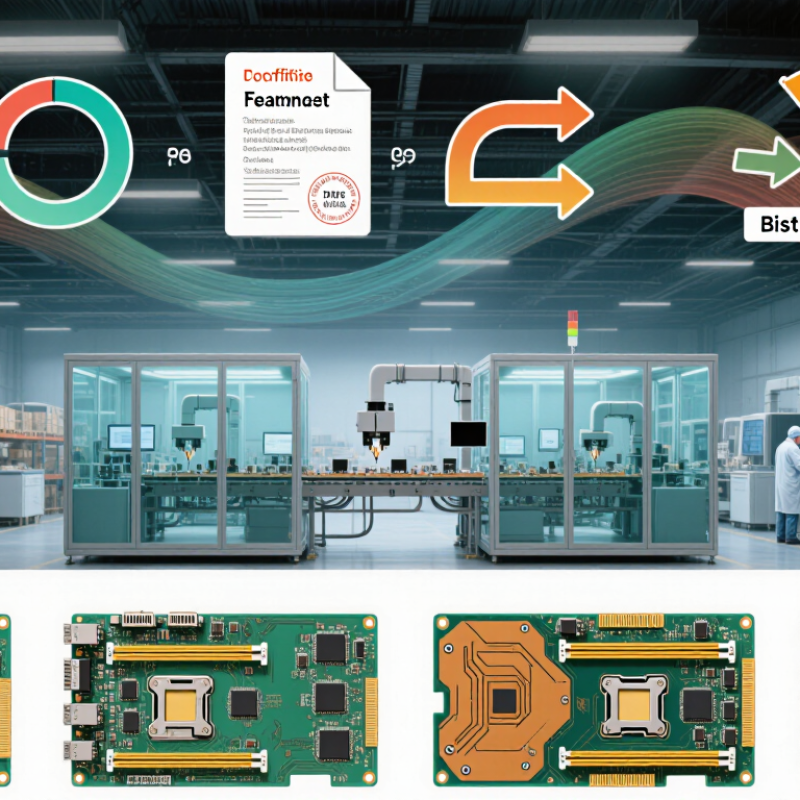
A strong PCB fabrication partner is evaluated by more than production capacity. Quality systems, engineering capability, process control, delivery reliability, traceability, and environmental compliance are essential indicators for international buyers.
The index is an illustrative procurement-weighting model based on common PCB sourcing requirements. Technical references include IPC-A-600, IPC-6012, ISO 9001 quality management principles, ISO 14001 environmental management principles, and RoHS compliance requirements. It is intended for supplier evaluation rather than as a ranking of individual companies.
China’s Leading Circuit Board Fabrication Manufacturers by Specialization
China’s leading circuit board fabrication manufacturers are rarely identical in capability. Their strengths usually follow a clear specialization. HDI specialists build fine-line layers, laser microvias, and sequential lamination for compact electronics. Rigid-flex producers focus on controlled bending, reinforced transitions, and stable connector zones. High-frequency facilities manage low-loss laminates, tight impedance, and careful surface finishes. Heavy-copper experts support power boards with thicker copper and stronger thermal paths. Details matter.
A reliable supplier should show process evidence, not only attractive sample boards. Ask for cross-section reports, impedance coupons, solderability data, and lot-level traceability. For automotive work, audited quality systems and IATF 16949 experience can reveal stronger process discipline. For demanding assemblies, thermal cycling and cleanliness controls deserve direct discussion. Engineers should review drill maps, copper distribution, tolerances, and design-for-manufacturing notes before release. This is where practical experience becomes visible.
Prototype-focused factories may offer quick engineering feedback and small-batch flexibility. High-volume plants often provide automated inspection, stable yields, and disciplined capacity planning. Neither model wins every project. A polished capability list can still hide slow corrective action or weak communication. I would request recent anonymized yield data and a sample corrective-action report. Some manufacturers may resist. That hesitation deserves attention. The best fit depends on board geometry, reliability targets, order volume, and the supplier’s willingness to disclose limits.
Key Technologies Used in Chinese PCB Fabrication
China’s PCB fabrication industry combines mature multilayer production with advanced high-density interconnect technology. Many factories use sequential lamination to build compact boards with multiple stacked layers. Laser drilling creates microvias for smartphones, medical devices, and industrial controllers. Mechanical drilling remains common for larger through-holes.
Controlled impedance is essential for high-speed designs. Fabricators adjust trace width, copper thickness, and dielectric spacing to meet the target value. Automated optical inspection checks missing tracks, shorts, and surface defects. Flying-probe testing then verifies electrical continuity without requiring a permanent test fixture. Some facilities also use X-ray inspection for hidden vias and dense solder joints. These methods improve reliability, but no process is flawless.
Tips:
Request a stack-up drawing before production. Confirm impedance tolerances and copper weight in writing. Ask for cross-section samples when the design contains microvias. Review inspection records, material certificates, and lot traceability. A polished report can still hide weak process control, so independent verification remains useful. Prototype results may look excellent, yet mass production can reveal registration drift or uneven plating. That uncomfortable gap deserves attention. Experienced buyers compare pilot data with later lots, rather than trusting one successful sample. Surface finish selection also matters, especially for fine-pitch assembly and long storage periods. Good communication between the designer and factory often prevents expensive revisions.
How to Select the Right Chinese Circuit Board Manufacturer
China Top Circuit Board Fabrication Manufacturers?
Selecting the right Chinese circuit board manufacturer requires more than comparing prices. Review their fabrication experience, engineering capabilities, and quality systems. Ask for production evidence, not polished promises. A reliable supplier should explain layer counts, material options, impedance control, and realistic tolerances clearly.
Request sample boards before approving mass production. Inspect solder mask alignment, edge quality, drilled holes, and surface finish under magnification. Confirm whether automated optical inspection, electrical testing, and batch traceability are used. Discuss design-for-manufacturing feedback early. A capable engineering team may identify narrow traces, crowded vias, or heat-related risks before they become expensive problems. Lead times should include inspection and shipping, not only factory processing.
Tips: Visit the facility when possible, or arrange a live video audit. Check calibration records and recent test reports. Compare several quotations using identical files and specifications. Confirm communication hours, revision control, packaging, and corrective-action procedures. Small details matter. One supplier once offered an attractive price but answered technical questions vaguely. That experience taught me to value transparent documentation over impressive sales language. Even a careful evaluation can miss something, so keep the first order controlled and measurable.