Choosing a pcb printed circuit board involves more than comparing quoted prices. Buyers need to match board construction to electrical demands, available space, production volume, and expected service life. A low-cost board can become expensive if it requires extra shielding, assembly steps, or early replacement. Details matter.
This guide introduces ten common PCB types, including single-sided, double-sided, multilayer, rigid, flexible, rigid-flex, HDI, metal-core, high-frequency, and ceramic boards. These categories are not always separate: a board may be both multilayer and rigid-flex, for example. That overlap is easy to miss. Understanding the differences helps buyers ask clearer questions about layer count, copper weight, materials, tolerances, and operating conditions.
A practical comparison should consider where the board will work, not only how it looks in a catalog. A metal-core design may help move heat away from power components, while a flexible board can fit a narrow, moving assembly. Yet neither choice is automatically better. Confirm the manufacturer’s capabilities, request relevant test or quality documentation, and check that the proposed materials suit the application. Specifications deserve a second look. Buyers can also compare lead times and production limits before committing. This overview offers a starting point, not a substitute for engineering review; real projects sometimes reveal constraints that a product list cannot show.
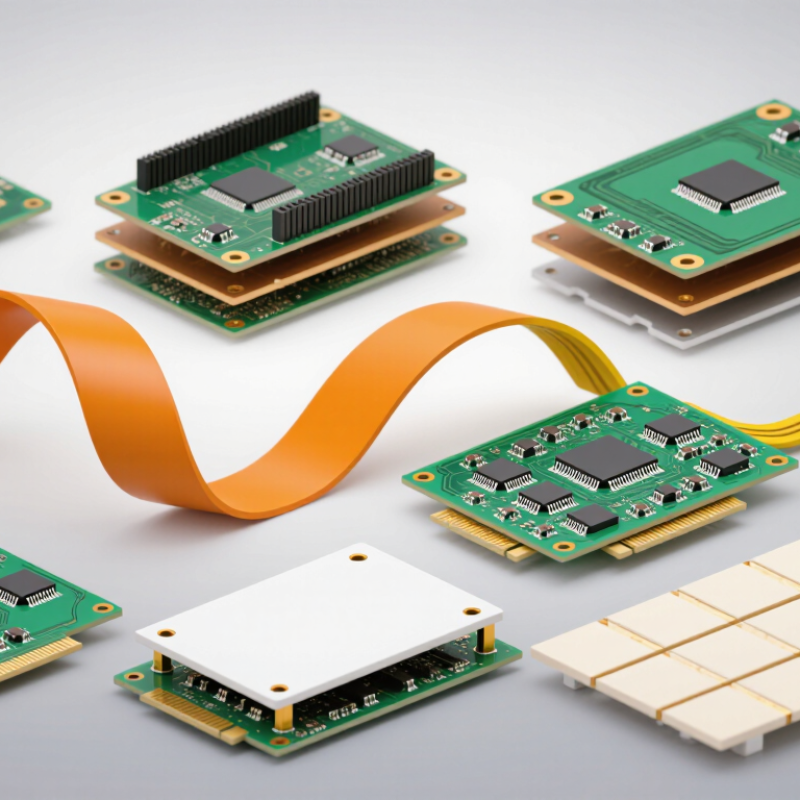
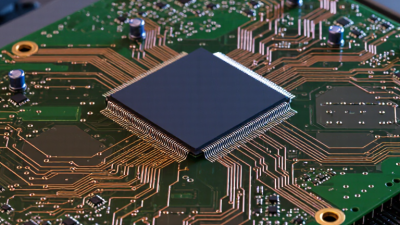
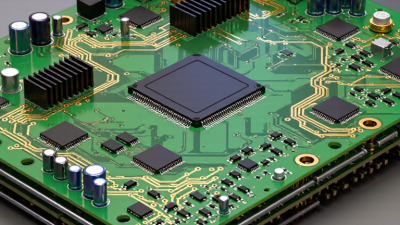
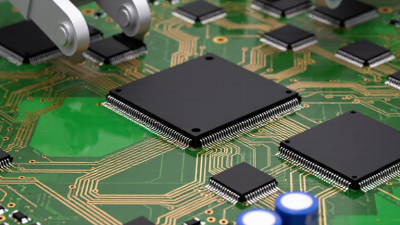
A printed circuit board is the physical platform that supports and connects electronic components. Copper traces act like narrow roads for power and signals. Insulating layers keep those paths separate, while vias connect traces between layers. A component’s soldered leads meet copper pads, forming electrical connections. When powered, current follows designed paths; signal speed and integrity depend on trace geometry, materials, and layout. It is a small system, not just a flat sheet.
Prismark’s 2024 industry forecast estimated global PCB production value at about US$73.9 billion in 2023, with growth projected through 2028. This scale reflects how widely boards are used, from household controls to industrial sensors. But market size alone cannot tell a buyer whether a board suits a specific design. Layer count, copper thickness, operating temperature, and expected service life matter more.
Tips: Ask for the stack-up drawing and material specifications. Check that connector locations and mounting holes match your enclosure. For a simple controller, a two-layer board may be enough; dense or high-speed designs may need more layers. A common oversight is heat: a board can pass an initial test yet fail after long operation. Review the real operating conditions before approving production.
| PCB Type | Structure and How It Works | Typical Applications | Main Advantages | Buyer Considerations |
|---|---|---|---|---|
| Single-Sided PCB | Conductive copper traces are present on one side of an insulating substrate. Components are commonly mounted on the opposite side or directly on the copper side. | Simple controls, basic consumer devices, LED products, and low-complexity power circuits. | Simple construction, straightforward production, and generally low cost. | Check whether the circuit can fit on one copper layer; routing space and circuit complexity are limited. |
| Double-Sided PCB | Copper layers are present on both sides of the substrate. Plated through-holes can electrically connect traces between the two sides. | Industrial controls, instruments, power supplies, and moderately complex electronics. | More routing space and design flexibility than a single-sided board. | Confirm the required hole plating, board thickness, copper weight, and component-mounting approach. |
| Multilayer PCB | Three or more conductive copper layers are bonded with insulating material; many designs use four or more layers. Vias connect selected layers. | Computers, communications equipment, automotive electronics, and compact control systems. | Supports dense routing, compact layouts, and dedicated power or ground planes. | Layer count, stack-up, impedance requirements, via design, and fabrication tolerances affect cost and lead time. |
| Rigid PCB | Built on a solid substrate that is not intended to bend during normal use. FR-4 glass-reinforced epoxy is a common substrate material. | Appliances, industrial equipment, computers, and most fixed electronic assemblies. | Widely available, mechanically stable, and suitable for many standard assembly processes. | Specify the required outline, thickness, operating environment, copper weight, and surface finish. |
| Flexible PCB | Uses a bendable insulating film, commonly polyimide, with patterned copper conductors. It can be designed for a fixed bend or repeated flexing. | Wearables, cameras, displays, medical devices, and assemblies with moving or space-constrained sections. | Can reduce wiring and connectors while fitting into curved or compact spaces. | Define bend radius, bend direction, number of flex cycles, stiffener locations, and coverlay requirements. |
| Rigid-Flex PCB | Combines rigid board sections with flexible circuit sections in one integrated construction. | Compact instruments, aerospace and defense electronics, and products with complex packaging needs. | Can reduce interconnects and assembly steps while allowing three-dimensional packaging. | Review the rigid-flex stack-up, bend areas, transition zones, fabrication tolerances, and assembly plan early. |
| HDI PCB | High-density interconnect boards use finer lines and spaces and often use microvias, blind vias, or buried vias to connect layers. | Mobile devices, compact computing products, advanced instruments, and high-density modules. | Enables dense component placement and shorter interconnections in a small footprint. | Check minimum trace and space, microvia dimensions, layer sequence, component pitch, and manufacturing capability. |
| Metal-Core PCB | Uses a metal base, commonly aluminum or copper, with a dielectric layer between the base and the copper circuit layer. | LED lighting, power electronics, and applications that need heat to spread away from components. | Provides a thermal path through the board structure and can improve heat spreading compared with a basic insulating board. | Confirm the metal base, dielectric thermal properties, board thickness, electrical isolation, and mounting method. |
| High-Frequency PCB | Designed for high-frequency signals using controlled electrical properties and carefully selected laminate materials and stack-ups. | RF and microwave circuits, antennas, radar systems, and high-speed communications equipment. | Can support predictable signal behavior when material properties and layout are controlled. | Specify frequency range, dielectric constant and tolerance, loss requirements, impedance, copper profile, and stack-up. |
| Ceramic PCB | Uses a ceramic substrate, such as alumina or aluminum nitride, with patterned conductive layers. Construction varies by ceramic and metallization process. | Power modules, high-temperature electronics, sensors, and applications requiring electrical insulation with thermal management. | Can offer strong thermal performance and stability in demanding environments, depending on the ceramic material and design. | Evaluate thermal conductivity, substrate thickness, metallization, brittleness, thermal expansion, and assembly compatibility. |