2026 Top PCB Fabrication and Assembly Companies
Choosing a PCB partner can shape a product’s cost, reliability, and time to market. The best fit depends on more than a polished website or a low quotation. Buyers should compare engineering support, board complexity, production volume, quality controls, and assembly capabilities. A prototype may need quick design feedback and careful inspection. A larger program may depend on repeatable processes, stable component sourcing, and clear communication.
Veteran PCB technologist Happy Holden has emphasized the importance of designing with manufacturing in mind. That principle matters across pcb fabrication and assembly: a tight trace, a dense via field, or a hard-to-source component can affect both production and yield. Small details count. This guide introduces leading companies for 2026 and considers the capabilities that distinguish them, from advanced multilayer fabrication to turnkey assembly. Company rankings, however, cannot capture every project’s needs. A supplier suited to a compact prototype may not be ideal for sustained, high-volume production. Readers should verify current certifications, facilities, lead times, and service scope directly with each provider. These details can change, and marketing claims deserve careful checking. The comparison is a starting point—not a substitute for a technical review, sample evaluation, and clear discussion of requirements.
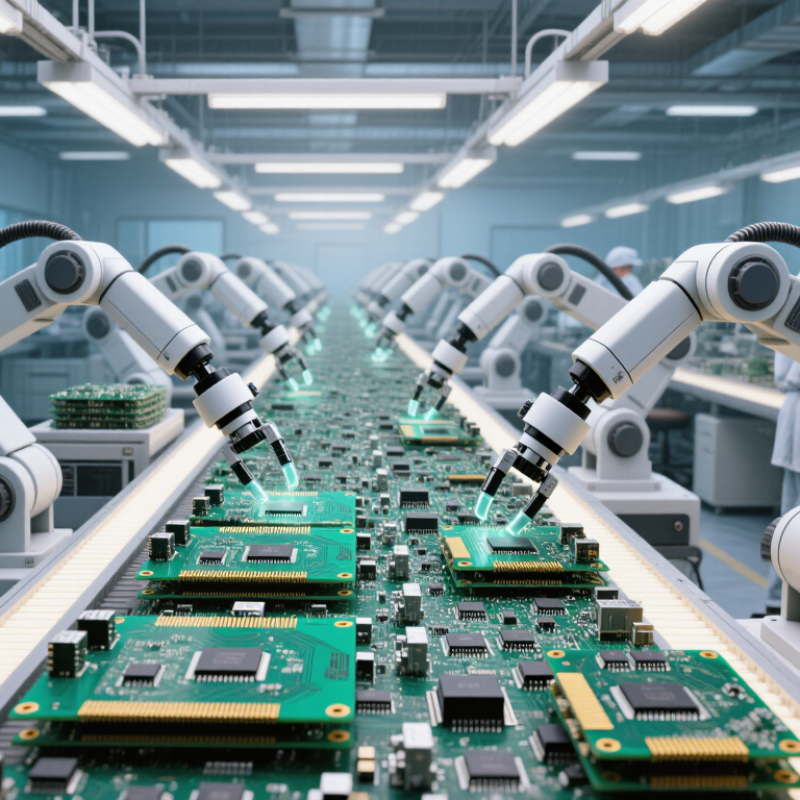
PCB Fabrication and Assembly: Processes, Products, and Supply-Chain Roles
PCB fabrication turns a circuit layout into a physical board through imaging, etching, drilling, plating, and surface finishing. Assembly then places components, applies solder paste, and uses reflow or selective soldering to create electrical connections. These are distinct jobs, but they depend on shared data: layer stack-up, material choices, tolerances, and component specifications. A small mismatch, such as a footprint that crowds a connector, can delay both stages. IPC’s 2024 industry outlook and Prismark’s PCB market analysis point to continued demand growth; Prismark projects global PCB production value approaching US$90 billion by 2028. Growth raises capacity needs, but it does not remove bottlenecks in materials, tooling, or inspection.
Supply-chain roles extend beyond the fabricator and assembler. Designers release manufacturing files; material suppliers provide copper-clad laminates and solder materials; contract manufacturers coordinate components, assembly, and testing. Distributors help manage availability, while test providers verify continuity and function. Each handoff can introduce errors. A technically sound board may still wait for one unavailable component. That part is easy to underestimate.
Tips: Ask for a design-for-manufacturing review before releasing files. Confirm stack-up, drill sizes, solder-mask clearances, and test coverage in writing. Keep a second approved component option where practical, but recheck its electrical and mechanical fit. A spreadsheet is useful; it is not a substitute for engineering review.
2026 Top PCB Fabrication and Assembly Companies
PCB Fabrication and Assembly: Processes, Products, and Supply-Chain Roles
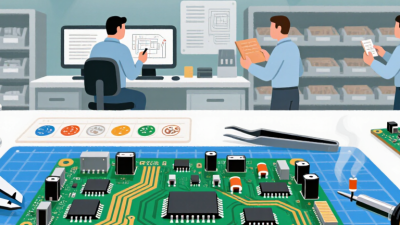
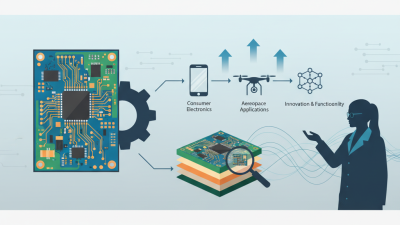
Representative design examples range from single-sided boards to complex multilayer boards. Actual layer counts vary with electrical, mechanical, and cost requirements; this chart is illustrative, not a market ranking. Fabricators produce the bare boards, while assembly providers populate them with components and perform inspection and testing.
Market Baseline: Prismark Valued 2024 Global PCB Output at US$73.6B
The 2024 global PCB output baseline is US$73.6 billion, according to the industry estimate cited in the market reference. That figure gives buyers and manufacturers a useful scale check, not a ranking of individual companies. It describes a broad market where a compact control board and a large multilayer panel can require very different materials, equipment, and production steps. The number is substantial. Still, it should not be mistaken for a forecast or a measure of assembly revenue alone.
For 2026 supplier comparisons, consistency matters more than a polished headline. Check whether reported figures cover bare-board fabrication, assembly, or both, and whether they use the same regions and reporting periods. A board may pass through drilling, plating, imaging, solder-mask application, and electrical testing before assembly begins. Each stage can affect lead time and yield. One limitation remains: a global total cannot show how capacity is distributed across product types or locations. It is a baseline, not the full picture. I would treat it as a starting point, then verify each company’s process scope, certifications, and documented quality data directly.
2026 PCB Fabricators: Unimicron, Zhen Ding, AT&S, and TTM Technologies
The 2026 PCB landscape is shaped by four different strengths: high-volume manufacturing, dense interconnect boards, advanced substrates, and complex regional production. Prismark’s 2024 industry review estimated global PCB production value at about US$73.6 billion, up roughly 5.8% year over year. That growth reflects rising demand from data-center equipment, automotive electronics, and connected devices. Scale matters. So does process control.
Among the four manufacturers highlighted here, one is associated with large production capacity, while another is known for high-density circuit boards. A third has a stronger focus on advanced substrates and precision manufacturing; the fourth serves customers needing technically complex boards and assembly. These are broad strengths, not guarantees for every order. Buyers should compare layer count, line width and spacing, material options, inspection methods, and assembly capability against their actual design files. Ask for sample build data, defect reporting, and delivery performance. A polished capability sheet is not enough. Prismark’s market figures describe the industry, not any single supplier’s quality or lead time, so qualification still depends on the product, factory, and production run.
2026 Assembly Leaders: Foxconn, Jabil, Flex, and Sanmina; Match by Scale
In 2026, the strongest assembly partner is not automatically the largest. Large electronics manufacturers can support high-volume programs, coordinate global production, and manage complex supply chains. But scale only helps when it fits your product. A stable design, clear forecast, and repeatable demand may suit a high-capacity provider. A prototype still changing every week may not.
Compare partners on practical evidence: production capacity, engineering support, quality controls, and the ability to move a build between sites. Ask how they handle a sudden forecast change, and request a sample production schedule. Check whether test equipment, component sourcing, and assembly lines are available where your product will be made. Details matter. A polished presentation is not proof of a smooth ramp.
There are trade-offs. Large providers may offer reach, yet smaller orders can receive less attention. That assumption needs testing, not repeating. Share your expected volumes and revision plans, then ask for a named escalation path and measurable quality targets. Review the answers with your engineering and procurement teams. The best match is the one whose capacity, communication, and process discipline fit your actual production needs—not simply the one with the biggest footprint.