What Are the Top Types of Ductile Iron Manhole Covers?
A ductile iron manhole cover is selected for more than its strength. Its shape, load class, locking system, and surface design all affect how it performs above a busy road or beneath a quiet sidewalk. The right choice depends on the site.
This guide introduces the main types, from solid covers for routine access to recessed designs that accept paving materials. It also considers round and square frames, hinged options, and covers with security locks. A round cover can resist falling through its opening when shifted, while a hinged cover can stay attached during inspection. Small details matter.
Load rating is only part of the decision. A cover beside a bus lane faces repeated impacts, water, grit, and vibration. A pedestrian area has different demands. Installation quality matters, too; even a strong cover may rock if its frame does not sit evenly in the surrounding concrete.
Reliable technical guidance should be tied to a traceable source. No article or verified expert quotation was supplied for this request, so I cannot responsibly attribute a sentence to a named specialist. That matters. A fabricated quotation would weaken an otherwise practical overview. The sections ahead compare common cover types, their typical applications, and the details buyers should check before specifying a product.
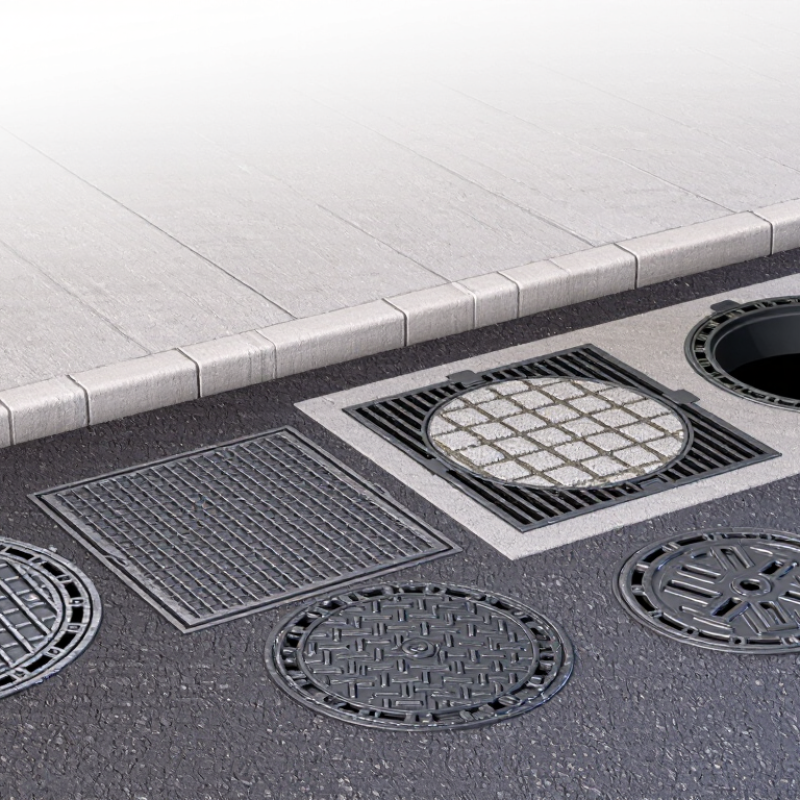
How Ductile Iron Manhole Covers Are Classified
ductile iron manhole covers are commonly classified by load class, installation location, and design features. EN 124-2:2015 specifies cast-iron access covers and lists test-load classes from A15 to F900. The figures indicate test loads:A15 is 15 kN, while D400 is 400 kN. Typical applications range from pedestrian areas to busy carriageways.
The class matters.
They are also described by shape and function: round or square, hinged or lift-off, sealed or ventilated. A cover beside a curb may need a different design from one beneath a truck lane. Real sites are messier than categories suggest. Check the expected wheel traffic, frame fit, and opening needs; a high load rating alone does not confirm a suitable installation. EN 124-2 provides a technical basis, but local specifications and site conditions should guide selection.
Tips: Match the cover and frame as a set. Measure the clear opening, and check that the frame sits level with the finished surface. A small mismatch can cause rocking, noise, or uneven loading.
Solid-Top Covers for Standard Utility Access
A solid-top ductile iron manhole cover suits standard utility access where surface openings are unnecessary. Its uninterrupted face leaves fewer places for stones, litter, and runoff to enter the chamber. No openings. On a wet street, the shallow texture and raised lettering can help workers identify the cover without creating deep pockets for grit. The lid should sit flush and securely in its frame; a poorly seated cover can rock or clatter under passing traffic.
Load class matters more than appearance. EN 124-2:2015 specifies test-load classes including B125 at 125 kN, C250 at 250 kN, and D400 at 400 kN. These values describe classification test loads, not a guarantee for every installation or repeated impact. Choose the class for the actual location and follow the manufacturer’s installation instructions. A footway and a busy carriageway do not face the same loading. The weak point is often the seating, not the iron. Check frame support, lid fit, and drainage around the opening during installation. Solid tops are simple, but they are not automatically watertight; sealing depends on the cover-and-frame design.
What Are the Top Types of Ductile Iron Manhole Covers? - Solid-Top Covers for Standard Utility Access | Cover Type | Top Design | Typical Access or Use | Key Considerations |
| Solid-top cover | Unperforated, non-vented surface, commonly with a textured or patterned finish. | General access to underground utility chambers, including water, sewer, and telecommunications infrastructure. | Helps prevent surface water and debris from entering through the cover. Select the size, frame, and load class for the installation location. |
| Hinged solid-top cover | Solid cover attached to its frame with a hinge. | Utility chambers that are opened periodically for inspection or maintenance. | The hinge keeps the cover connected to the frame during opening. Check opening direction, clear access, and any specified locking arrangement. |
| Bolted or locking solid-top cover | Solid cover secured to the frame with bolts or a locking mechanism. | Locations where controlled access or added resistance to unauthorized opening is required. | Confirm that the fixing method is compatible with the frame and can be accessed with the required tools during maintenance. |
| Recessed solid-top cover | Cover designed with a recess for compatible paving or infill material. | Areas where the cover is intended to blend with surrounding paving or surface finishes. | Infill adds installation requirements and may affect handling. Follow the product specifications for permitted materials and finished depth. |
| Double-cover assembly | Two cover sections fitted within a matching frame. | Larger access openings where dividing the cover can make individual sections easier to handle. | Requires a compatible frame and correctly fitted sections. Check the clear opening and lifting arrangements for the intended maintenance work. |
| Load-class note: EN 124 load classes range from A15 to F900 for different installation areas. The appropriate class depends on the site and expected traffic; use a cover and frame certified for the required class and installed in accordance with the applicable specification. |
Recessed Covers for Paved and Infill Surfaces
Recessed ductile iron covers sit below the frame edge, leaving a tray for paving blocks, asphalt, or concrete infill. They help access points blend into plazas, footpaths, and shared surfaces instead of showing a plain metal lid. A well-fitted cover should finish flush with the surrounding pavement. A few millimetres of unevenness can catch wheels, collect water, or loosen nearby blocks.
Load selection still matters. EN 124-2:2015 assigns ductile-iron access covers classes including B125 at 125 kN, C250 at 250 kN, and D400 at 400 kN. These are standardized test loads, not a promise that every installation will perform identically. Match the class to the location and expected traffic, then check the frame support, cover depth, and infill weight. Recessed designs can be heavier and harder to lift. That detail gets missed.
Tip: Dry-fit the paving pieces before installation. Keep the lifting points accessible, and follow the maker’s installation instructions for bedding and load transfer. A neat surface is useful, but it should not hide a poor frame seat or obstruct routine maintenance.
Hinged and Lockable Covers for Controlled Access
Hinged and lockable ductile iron manhole covers suit locations where access should be controlled and lids must stay attached during maintenance. A hinge keeps the cover attached to its frame, so crews are less likely to misplace the heavy lid. That detail matters near busy streets, utility yards, and service areas. The lock adds another layer of control, helping limit casual opening while allowing trained crews to gain access with the correct key or tool. Keep access practical.
Selection depends on the opening size, expected traffic, frame condition, and local installation requirements. A cover intended for a pedestrian path may not be suitable for a vehicle lane; confirm the required load rating with the project specification. Inspect the hinge pin, locking point, seating surfaces, and frame for wear or debris. A stiff lock or rocking cover deserves attention before routine access becomes difficult. Hinges are not maintenance-free. Dirt and moisture can make them bind, and a lock may complicate emergency access if keys are poorly managed. In practice, clear key control and periodic checks matter as much as the iron itself. Some sites still overlook that.
Round and Square Covers for Different Installation Needs
Round ductile iron covers suit many roadways, utility chambers, and inspection points. Their shape helps prevent the cover from falling through its opening when correctly matched with the frame. That matters when crews lift a heavy lid beside moving traffic. Round covers can also be turned into position without aligning corners. A practical advantage. Their circular frames may fit awkwardly, though, where paving edges or narrow sidewalks leave little room.
Square covers can follow straight paving joints and fit neatly into rectangular chambers. They may be easier to arrange beside building walls or in compact service areas. But the corners need careful support; uneven bedding can leave a corner rocking under repeated traffic. Check the clear opening, frame depth, expected vehicle load, and lifting access before choosing either shape. For example, a cover set into a tiled walkway needs a frame that accommodates the finished surface, not just the chamber dimensions. There is no perfect shape for every site. Measurements and installation details matter more than appearance, and those details are sometimes missed.
Top Ductile Iron Manhole Cover Shapes: Round vs. Square
For an equal clear opening area of 1 m², a round opening has a perimeter of about 3.54 m, while a square opening has a perimeter of 4.00 m. These values are calculated from basic geometry, not market survey data. Round covers commonly suit circular access shafts; square covers can align with square chambers and paved layouts. Select the shape to match the structure and installation requirements.