Electronic Contract Manufacturing Service Provider in California

Top Coffee Pouch Manufacturers for Global Buyers

Coffee reaches customers in many forms, but its pouch can shape freshness, shelf appeal, and daily use. For global buyers, choosing a manufacturer means looking beyond attractive samples. Material structure, seal quality, valve options, print accuracy, and filling-line compatibility all deserve close attention. A Coffee Pouch should protect the product while fitting the roaster’s actual packing process.

Manufacturers differ in equipment, minimum order quantities, customization, and communication practices. Buyers should compare technical specifications and request samples suited to their coffee and intended storage conditions. Ask how suppliers verify seals, manage color consistency, and handle production changes. Clear answers matter. So do documented quality procedures and realistic lead times.

Market requirements can also vary by destination. Confirm applicable packaging, labeling, and material rules with qualified local advisers rather than relying on a supplier’s general assurances. A specification sheet can look reassuring; a real production trial may tell a less tidy story. There is no perfect pouch for every roast, budget, or sales channel. This guide introduces manufacturers serving international buyers and outlines practical points for evaluating them. Treat company descriptions as a starting point, then verify capabilities, certifications, references, and sample performance directly. Careful checks take time. They can prevent costly surprises after an order has been printed and packed.
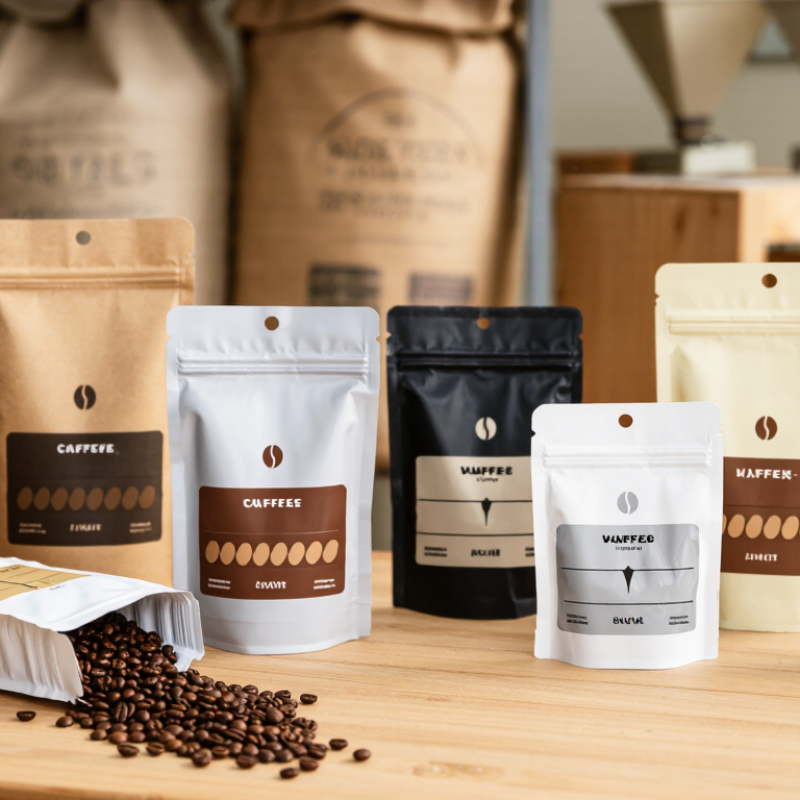
Top Coffee Pouch Manufacturers for Global Buyers

Understanding Coffee Pouches and Their Packaging Requirements

Coffee pouches must protect aroma, resist moisture, and survive filling, stacking, and shipping. The International Coffee Organization’s Coffee Report and Outlook estimated global coffee consumption at 177.0 million 60-kilogram bags in 2023/24. That scale makes dependable seals and consistent barrier performance practical priorities for global buyers. Whole beans release carbon dioxide after roasting, so some packs use one-way valves to vent gas while limiting air entry. A valve helps, but it is not magic. Ground coffee, meanwhile, has more exposed surface area and may need stronger protection against oxygen.

Tips: Request oxygen- and water-vapor-transmission data for the finished pouch, not just its film. Ask for seal-strength and drop-test results, too. Match testing to the planned shelf life and shipping conditions.

Choose the barrier structure around the product, roast date, and expected storage environment. Foil-based laminates can provide strong protection, while recyclable structures may involve different barrier trade-offs. Do not rely on material descriptions alone. Ask suppliers how they verify pouch performance and whether test conditions reflect humid warehouses or long transit routes. Small details matter: a weak corner seal or poorly adjusted filling line can undermine an otherwise suitable pack. Test filled samples before committing to large production runs.

Key Criteria for Evaluating Coffee Pouch Manufacturers

Selecting coffee pouch manufacturers starts with the product, not the sales brochure. A pouch for whole beans may need different barrier properties than one for ground coffee. Ask how the structure protects against oxygen, moisture, light, and aroma loss. Request test data, not just a confident explanation.

Check the seal and valve with real samples. Fill a pouch, press along its seams, and inspect whether the one-way valve sits firmly in place. Small details matter. Ask for food-contact documentation, quality-control records, and clear information about print consistency. A polished sample is useful, but it does not prove every production run will match.

Production fit matters too. Confirm minimum order quantities, lead times, and how defects are handled. Ask whether material claims, such as recyclability, apply to the complete pouch in your target market. Evidence can be more complicated than a label suggests. Compare responses from several manufacturers, and note who answers specific questions with verifiable details. No checklist catches everything; a trial order can still reveal issues that samples miss. A reliable partner should be willing to discuss those limits, not promise perfection.

Leading Coffee Pouch Manufacturers for Global Buyers

Leading Coffee Pouch Manufacturers for Global Buyers

Global coffee demand gives pouch suppliers little room for guesswork. The International Coffee Organization’s Coffee Development Report 2022 estimated consumption at 170.3 million 60-kilogram bags in 2020/21, up from 130.0 million in 1990/91. That scale makes consistent production essential. Leading manufacturers should show repeatable barrier performance, precise valve placement, and reliable heat seals. Ask for oxygen-transmission and seal-strength test results for the pouch structure you plan to order. A polished sample proves little.

Global buyers should also compare minimum order quantities, production capacity, lead times, and quality controls. Request samples from multiple production runs, not just a showroom batch. Check that print colors, pouch dimensions, and seal edges remain consistent. No supplier is flawless. Even a strong certificate may not reflect your roast, filling process, or shipping climate, so ask how testing conditions match real use.

The International Trade Centre’s packaging guidance emphasizes that packaging choices should reflect product protection, transport, and market requirements. For coffee, buyers can discuss material structures, closures, and recycling claims with suppliers, then verify the evidence behind those claims. Clear answers matter. A capable manufacturer should explain trade-offs plainly, including where a lower-cost material may offer less protection or create harder-to-verify recycling outcomes.

Coffee Production in Major Origins

Annual production estimates for the 2023/24 crop year, in million 60-kg bags.

Brazil and Vietnam are the largest origins shown. These production volumes provide context for global coffee supply and packaging demand; they are not manufacturer rankings. Figures are rounded estimates based on International Coffee Organization crop-year data.

Comparing Materials, Customization, and Production Capabilities

Coffee pouches must protect aroma through filling, shipping, and shelf storage. Buyers should compare materials against the product, packing line, and distribution route. A layered structure may combine polyester, polyethylene, and an oxygen barrier. Each layer affects durability, sealing, and recyclability options. There is no universal best material. Small details matter. Request technical data and test results alongside samples. Check whether seals stay intact after handling and whether the pouch stands securely when filled. A sample can look excellent on a desk but behave differently on a fast production line.

Customization ranges from pouch shape and valve placement to zipper style, print coverage, and finish. Ask manufacturers for clear artwork specifications, color controls, and proofing steps. Production capability matters just as much: confirm minimum order quantities, lead times, quality checks, and capacity for repeat orders. If your forecast changes, discuss how the supplier manages schedule adjustments. It is easy to focus on appearance and overlook filling compatibility; that mistake can cost time. A pilot run can reveal wrinkles, weak seals, or awkward opening behavior before a larger order. Even then, one test may not capture every condition. Compare samples under realistic storage and transport conditions.

How to Select and Source the Right Manufacturing Partner

Choosing a coffee pouch manufacturer starts with product needs, not a price sheet. Define fill weight, roast format, valve requirements, zipper, pouch dimensions, and expected shelf life. Ask which barrier structures are available and request technical data on oxygen and moisture transmission. A supplier should explain how those figures relate to your coffee, storage conditions, and target distribution time. Details matter. Check whether printing proofs, seal checks, and lot traceability are part of routine production.

Before committing, compare sample pouches made with the proposed materials. Fill them on your actual line if possible. A pouch that looks right on a desk may wrinkle or jam at speed. Discuss minimum order quantities, lead times, change-control procedures, and how defects are handled. Request relevant quality certificates and recent test records, then verify their scope and dates. Certifications help, but they do not replace clear answers or consistent production evidence. One awkward truth: a low quote can become costly when artwork changes or stock arrives late.

Tips: Send the same written specification to each candidate. Ask for a pre-production sample, written tolerances, and delivery milestones. Keep a retained sample from each approved run. If a manufacturer resists reasonable questions, pause and reassess.

Top Coffee Pouch Manufacturers for Global Buyers - How to Select and Source the Right Manufacturing Partner
Evaluation Dimension What to Look For Evidence to Request Why It Matters Buyer Action
Pouch format Stand-up, flat-bottom, side-gusset, or three-side-seal formats; confirm compatibility with the intended filling and sealing process. Technical drawings, finished-pouch samples, and filling-line compatibility details. Format affects shelf presentation, packing efficiency, storage, and equipment requirements. Specify pack size, fill weight, opening method, and whether the pouch will be filled manually or on an automated line.
Barrier structure Ask for the proposed layer structure and its oxygen, moisture, and light-barrier properties. Common constructions may use polymer, metallized, or foil layers. Material specification and relevant barrier-test reports, including test conditions. Roasted coffee quality is sensitive to oxygen, moisture, and light exposure. Required protection depends on the product and distribution conditions. Share the coffee type, target shelf life, storage conditions, and destination-market requirements before approving a structure.
Degassing valve For freshly roasted whole-bean coffee, assess whether a one-way degassing valve is needed and where it should be positioned. Valve specification, placement drawing, and samples tested with the intended pouch. A valve can release gas from freshly roasted coffee while helping limit air ingress; suitability depends on the product and pack design. Confirm the valve requirement with the roaster and test the filled pouch under expected handling conditions.
Closure and opening features Evaluate zipper type, tear notch, reseal performance, and any required tamper-evident features. Closure samples, seal-integrity results, and details of available feature options. Convenience features affect consumer use and can introduce additional sealing or quality-control considerations. Test opening and reclosing with the actual pouch dimensions and product fill.
Food-contact compliance Confirm that the materials and inks are suitable for the intended food-contact use and destination market. Applicable declarations of compliance, material information, and supporting test documents for the destination market. Food-contact rules differ by jurisdiction, material, and intended use; a general certificate may not establish compliance for every market. Identify every target country and have the documentation reviewed against its applicable requirements before production.
Quality management and traceability Review the manufacturer’s quality controls, lot identification, complaint handling, and change-control process. Relevant management-system certificates, inspection procedures, sample records, and traceability examples. Documented controls support consistent production and help investigate defects or material changes. Verify certificate scope and validity, and agree on lot records and notification requirements in the purchase terms.
Printing and artwork Confirm print method, color-management process, artwork requirements, and controls for version changes. Printed samples or proofs, artwork templates, and written approval procedures. Clear artwork control reduces the risk of incorrect claims, outdated information, or mismatched colors. Approve a production-ready proof and lock the artwork version before the order is released.
Minimum order quantity and cost Compare quoted minimum order quantity, tooling or setup charges, unit price, and any costs for changes or repeat orders. A written quotation showing assumptions, order quantities, included features, and additional charges. Minimum quantities and pricing depend on the structure, dimensions, print method, and production setup. Request comparable quotations using the same specification and ask how pricing changes at different order volumes.
Production and delivery schedule Obtain separate estimates for sampling, production, inspection, and transport; clarify when each lead time begins. Written schedule, shipping terms, dispatch location, and contingency plan for delays. Timing varies with materials, order size, print approval, capacity, and shipping route. Build artwork approval, sample review, transit, and customs clearance into the launch plan.
Sampling and performance testing Assess unprinted and printed samples, seal quality, dimensions, zipper function, and filling-line performance. Pre-production samples and agreed test methods or acceptance criteria. Testing the intended pouch and product can reveal issues that specifications alone may not show. Approve a representative pre-production sample and retain a reference sample for comparison with delivered goods.
Sustainability and end-of-life Ask what materials are used and whether the proposed pouch is accepted in the collection or recycling systems available in the target market. Material breakdown, supporting claims documentation, and market-specific disposal guidance. Recyclability and disposal depend on the complete packaging structure and local infrastructure; claims should be substantiated. Review environmental claims for accuracy and confirm local acceptance before using recycling or compostability statements.
Commercial and communication fit Assess responsiveness, technical support, change management, payment terms, and the process for resolving quality issues. Named project contacts, written specifications, escalation process, and agreed commercial terms. Reliable coordination helps manage specification changes, approvals, and issues across international supply chains. Document responsibilities, tolerances, inspection rights, remedies, and communication milestones in the agreement.

Note: Minimum order quantities, pricing, production schedules, material performance, and compliance documentation are supplier- and project-specific. Confirm all specifications and market requirements in writing before placing an order.