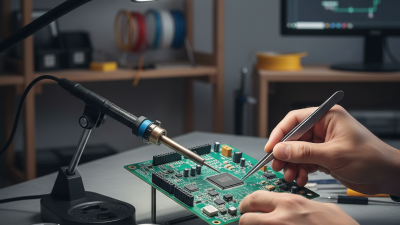
Choosing an electronic assembly partner is rarely just a price comparison. A board that looks simple on a quotation can involve fine-pitch components, tight tolerances, and demanding test requirements. For global buyers, the right manufacturer must connect engineering support with dependable production, clear communication, and realistic delivery planning. Small details matter. A well-documented change notice or a traceable component lot can prevent costly confusion later.
This guide to 2026’s top electronic assembly manufacturers helps buyers compare providers by practical capabilities, not marketing claims alone. It considers services such as PCB assembly, prototyping, box build, inspection, and functional testing, alongside quality systems, industry experience, and supply-chain visibility. Certifications can offer useful evidence, but they do not guarantee a perfect fit. No supplier excels at everything. That is worth remembering.
The strongest choice depends on the product, production volume, destination markets, and level of support required. A startup refining its first design may value responsive engineering feedback; an established buyer may prioritize consistent output across multiple facilities. Ask how a manufacturer handles component substitutions, production changes, and quality issues. Request specific examples where possible. This comparison is a starting point, not a substitute for due diligence. Real factory performance can differ from a polished capability sheet, and buyers should verify important claims before committing.

Electronic assembly manufacturing turns bare circuit boards and components into tested products. Typical work includes component placement, soldering, inspection, firmware loading, and functional testing. The process may use surface-mount or through-hole assembly, depending on the design. A board passes through controlled stations as equipment and operators check alignment, solder joints, and traceability records. Details matter. A misplaced component can delay production or affect reliability.
Tips: Before comparing manufacturers, share clear drawings, a bill of materials, expected volumes, and test requirements. Ask how they handle component changes, prototype feedback, quality checks, and scheduling. Request practical evidence, such as inspection records or a process walkthrough. For global sourcing, compare communication hours, shipping routes, packaging needs, and capacity flexibility—not just the quoted unit price. Small gaps count.
The global market is shaped by regional supply networks, component availability, skilled labor, automation, and demand for shorter product cycles. Manufacturing close to customers may simplify coordination, while a distant partner may offer different capabilities or capacity. Neither option is automatically better. Forecasts can miss disruptions, too. Buyers should revisit assumptions when designs or order volumes change.

The global electronic manufacturing services (EMS) market was estimated at US$575.3 billion in 2023 and is forecast to reach US$856.2 billion by 2030. These are market-research estimates; the forecast is not a measured result.
Source: Grand View Research, Electronic Manufacturing Services Market Size, Share & Trends Analysis Report, 2024–2030.
Choosing an electronic assembly manufacturer in 2026 takes more than comparing unit prices. Ask how engineering changes are approved, documented, and shared with production teams. Request a sample build record showing component lots, inspection results, and rework history. Details matter. A traceability system is useful only when staff can retrieve the right record quickly.
Review process controls that match your product’s risk and volume. Ask how solder paste, placement accuracy, and temperature profiles are monitored. For complex boards, discuss inspection coverage, functional testing, and how failures are investigated. Ask to see it. A factory tour or live video walkthrough can reveal whether work instructions are accessible at the line and whether test equipment is maintained. Certificates can support evaluation, but they do not replace evidence from actual production.
Assess communication and supply continuity, too. Ask who handles design questions, how schedule changes are reported, and what happens when a component becomes unavailable. A realistic pilot run can expose unclear drawings or awkward test access before larger orders begin. Even a tidy audit file may miss a recurring line-side issue, so speak with both quality staff and operators. No checklist catches everything; leave room to verify assumptions during the first build.
A practical, brand-neutral framework for comparing electronic manufacturing services (EMS) and contract assembly providers. Use the evidence column to assess each supplier against the requirements of your product and target markets.
| Evaluation Dimension | What to Assess | Evidence to Request | Buyer Decision Check |
|---|---|---|---|
| Quality management system | Whether the supplier operates a documented quality system appropriate to the product, manufacturing sites, and intended markets. | Current certificates, certification scope, issuing body, covered site addresses, audit status, and corrective-action process. | Confirm the certificate applies to the actual production site and relevant activities; determine whether customer or product requirements call for additional standards. |
| Industry-specific requirements | Experience with sector requirements such as automotive, medical devices, aerospace, industrial controls, or consumer electronics. | Applicable certifications or customer approvals, relevant process documentation, and examples of comparable product experience that do not disclose confidential information. | Match the supplier’s documented scope and controls to the product’s regulatory and contractual obligations. ISO 13485, IATF 16949, and AS9100 apply to particular contexts and are not interchangeable. |
| PCB assembly capability | Surface-mount and through-hole processes, supported component packages, board dimensions, assembly complexity, and available inspection methods. | Equipment and process capability overview, supported design rules, sample inspection plans, and capability limits for the proposed line. | Check that the supplier can build the actual board and component mix; verify limits during a technical review or pilot build rather than relying on a general capability list. |
| Workmanship standards | How assembly acceptability is defined, inspected, recorded, and communicated to the customer. | Applicable workmanship standard and revision, acceptance class, inspection criteria, defect records, and operator training approach. | Agree on the applicable IPC-A-610 acceptance class and any customer-specific requirements in the contract or quality agreement; the class should reflect product use and risk. |
| Inspection and test coverage | Use of solder-paste inspection, automated optical inspection, X-ray inspection where appropriate, in-circuit testing, and functional testing. | Process flow, inspection coverage, test specifications, sample reports, calibration records, and procedures for handling failures. | Confirm that test methods can detect the relevant failure modes. Agree on test fixtures, test ownership, coverage expectations, and result records before production. |
| Traceability and change control | Ability to link production records to relevant materials, lots, process steps, test results, and approved revisions. | Example traceability record, material-lot controls, engineering change workflow, revision control procedure, and record-retention policy. | Define the required traceability depth and retention period based on product, customer, and regulatory requirements; verify that records can be retrieved promptly. |
| Component sourcing and counterfeit-risk controls | Approved sourcing channels, component authenticity checks, handling of obsolete or constrained parts, and controls for customer-supplied materials. | Procurement controls, supplier approval process, incoming inspection procedure, material certificates where applicable, and escalation process for shortages or substitutions. | Require written approval before substitutions. Review how the supplier documents source, date codes, lot information, and any risk-based authenticity checks. |
| Regulatory and materials compliance | Ability to support applicable market and customer requirements for restricted substances, product documentation, and material declarations. | Supplier declarations, material-compliance records, product-level documentation where available, and a process for tracking regulatory changes. | Specify applicable requirements, such as RoHS or REACH obligations, for the product and destination market; confirm scope and supporting documentation rather than assuming a generic claim covers every part. |
| Capacity and delivery performance | Available production capacity, lead-time assumptions, planning flexibility, and performance against agreed delivery dates. | Capacity and loading overview, lead-time breakdown, delivery performance history for comparable work, and business-continuity plans. | Set measurable service-level targets with agreed definitions, reporting frequency, escalation steps, and remedies in the commercial agreement. |
| Engineering and new-product introduction | Support for design-for-manufacturing reviews, prototype builds, process validation, ramp-up, and design changes. | New-product introduction workflow, design review checklist, sample build plan, issue-tracking process, and ownership matrix. | Assess whether engineering support is available at the required project stages and whether responsibilities, turnaround expectations, and deliverables are documented. |
| Global operations and logistics | Manufacturing-site suitability, shipping routes, customs documentation capability, packaging, and continuity across regions. | Site list, logistics process, packaging specifications, export-documentation workflow, and contingency plans for disruptions. | Evaluate total landed cost, transit time, import responsibilities, and supply-chain risk for the intended destination—not just the quoted assembly price. |
| Commercial transparency and risk | Clarity of quotation assumptions, non-recurring costs, tooling ownership, warranty terms, confidentiality, and exit arrangements. | Itemized quotation, statement of work, quality agreement, tooling and data ownership terms, confidentiality terms, and end-of-life or transfer provisions. | Resolve assumptions and ownership in writing before awarding production; compare the full lifecycle cost and contractual risk alongside unit pricing. |
Note: This table is an evaluation framework, not a supplier ranking or a claim that any provider meets a particular requirement. Certification scope, standards editions, customer requirements, and applicable regulations should be verified for each project and production site.
Choosing an electronic assembly manufacturer involves more than comparing unit prices. Buyers should check whether a supplier can review a bill of materials, flag hard-to-source components, and explain production risks before a purchase order is placed. A useful first step is a technical discussion using real design files, not just a polished capability sheet.
Strong manufacturers document how boards move through surface-mount placement, soldering, inspection, and functional testing. Ask what inspection records are available, how component substitutions are approved, and how production changes are communicated. A clear answer should include practical details, such as traceable lot numbers and sample test reports. Small details matter. They make later troubleshooting less dependent on memory.
Global projects also need realistic communication about lead times, packaging, and shipping paperwork. Ask for a pilot build when the design or process is unfamiliar, then review defects and test results together. The cheapest quotation may exclude fixtures, testing, or engineering support, so compare the full scope. Even careful suppliers can miss things; a rushed drawing review, for example, may leave an unclear connector orientation. Buyers should keep their own specifications current and record decisions in writing. No checklist removes every risk, but steady communication makes problems easier to spot before they reach a larger production run.
Comparing electronic assembly manufacturers means looking beyond a process list. Check whether a supplier supports your board complexity, component sourcing, inspection plan, and expected production volume. Ask for examples of how it handles a design change after pilot builds. A capable engineering team should explain trade-offs clearly, not just promise a fast launch. Request sample inspection records and test reports, with sensitive customer details removed. Small details matter: connector alignment, solder-joint criteria, and how defects are recorded.
Geographic coverage affects more than shipping time. Compare factory locations with your component sources, customer sites, and preferred freight routes. Ask how materials move between facilities, who manages customs paperwork, and what happens when a shipment is delayed. Distance matters. A nearby plant may shorten delivery, while a second qualified site can add flexibility. Yet extra sites can complicate process control, so verify that work instructions and quality checks stay consistent.
Tips: Share a forecast, target volumes, and a sample bill of materials before requesting quotes. Ask for lead-time assumptions in writing. Confirm which tests are included, such as visual inspection, electrical testing, or functional checks. A polished presentation is not proof of dependable execution. Compare evidence, then revisit your criteria; some priorities may be less clear than expected.
For global buyers, an electronic assembly manufacturer should show how quality is controlled, not just report a pass rate.
Short sentence. Request first-article inspection records, process limits, and examples of corrective actions. On the production line, check whether solder-paste inspections, component verification, and reflow profiles are recorded by lot. X-ray and functional testing can help when package design or product risk warrants them. A polished dashboard can still hide weak sampling.
Compliance starts with current material declarations, supplier traceability, and clear change-notification procedures.
Requirements vary by destination and product category, so confirm applicable obligations with qualified compliance staff. Paperwork alone is not enough. Compare each certificate’s scope, site address, and expiry date with the actual production location. Ask how the factory prevents unapproved component substitutions from entering a build.
Supply chain reviews should map single-source parts, realistic lead times, and available production capacity.
Ask what happens if a key component is delayed for several weeks. A second source helps only after qualification. I would not treat a risk score as certainty; disruptions can begin with ordinary delays. Request recent delivery data and a clear escalation contact, while recognizing that forecasts are imperfect.