China Top Enclosed Circuit Breaker Manufacturers for Global Buyers
China’s Enclosed Circuit Breaker industry serves projects ranging from compact factory panels to large commercial distribution systems. For global buyers, comparing manufacturers means looking beyond catalog prices. An Enclosed Circuit Breaker must match the system voltage, rated current, breaking capacity, enclosure protection, and installation environment. A unit beside a dusty production line may need different protection from one installed in a clean indoor cabinet. Details matter.
This guide introduces Chinese manufacturers and explains how buyers can assess their suitability. It considers product range, customization, quality controls, technical documentation, export experience, and communication during sampling and production. Buyers should request current test reports, clear drawings, and evidence that ratings apply to the exact model being offered. They should also confirm lead times, spare-part availability, and who handles technical questions after delivery. Those checks can prevent costly surprises. A polished website alone proves little.
Manufacturer claims deserve careful review, and a shortlist should be checked against project requirements. No list is perfect. Factory capabilities change, and one supplier may suit a standard panel order but not a demanding outdoor installation. The comparisons ahead offer a practical starting point, not an endorsement or substitute for engineering review. Share specifications with qualified professionals, verify applicable local requirements, and confirm all details directly with each manufacturer before placing an order.
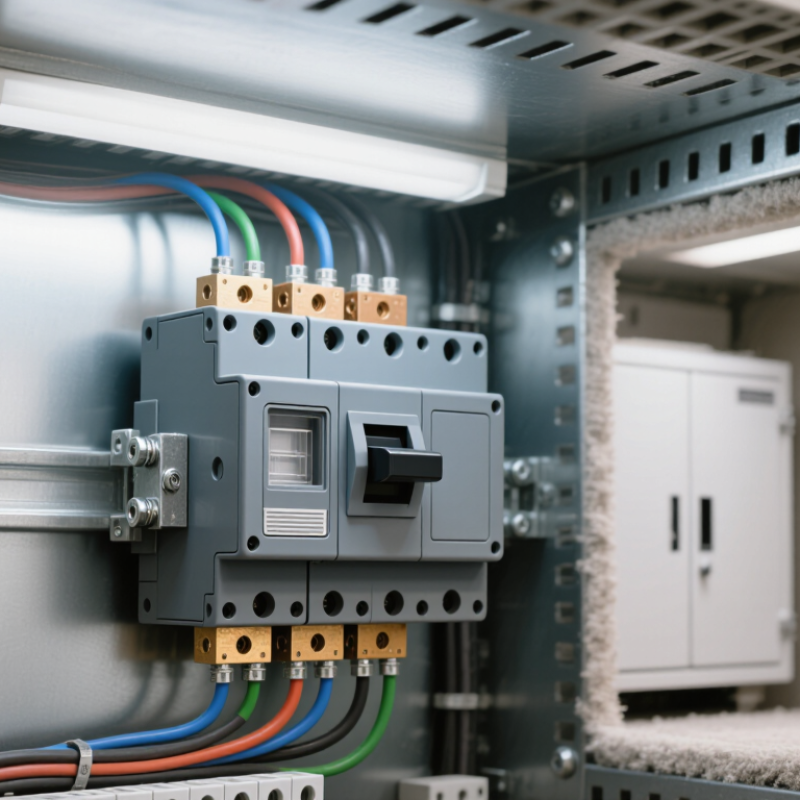
Understanding Enclosed Circuit Breakers and Their Applications
An enclosed circuit breaker places a switching and protection mechanism inside a protective housing. It interrupts current when a circuit experiences an overload or short circuit. The enclosure helps limit contact with live components and shields the device from dust, moisture, or accidental impact, depending on its design. That detail matters. An enclosure is not automatically suitable for every environment.
These breakers are commonly used in building distribution panels, pump systems, HVAC equipment, and industrial machinery. Picture a workshop motor starting repeatedly: the breaker must handle normal operating current while responding to a fault. For outdoor equipment, enclosure protection and temperature range deserve close attention. Ratings vary, so the appearance of a sturdy case alone proves little.
Selection involves matching voltage, current, pole count, and interrupting capacity to the circuit and expected fault conditions. Check the enclosure’s environmental rating and installation requirements, too. A breaker with the wrong rating may not provide the intended protection, even if it fits the panel. Not always obvious. Qualified electrical personnel should verify coordination with upstream devices and follow the manufacturer’s installation instructions. Labels can be easy to overlook during replacement, and that small omission can create real uncertainty later.
China’s Enclosed Circuit Breaker Manufacturing Landscape
China’s enclosed circuit breaker manufacturing landscape is shaped by domestic demand and export-oriented production. The China Electricity Council reported national electricity consumption of 9.22 trillion kWh in 2023, up 6.7% year over year. This supports demand for low-voltage distribution equipment across factories, buildings, and infrastructure. Still, demand alone does not prove product quality.
The International Energy Agency’s Electricity 2024 report says global electricity demand rose 2.2% in 2023 and is expected to grow faster through 2026. Chinese suppliers face pressure to scale while maintaining reliable thermal performance and fault interruption. Buyers should examine enclosure materials, rated current, breaking capacity, and test documentation. Small details matter: a loose terminal or poorly ventilated cabinet can generate heat inside a busy distribution panel.
Factory maturity varies. Ask for traceable test records, production consistency data, and clear answers about operating conditions. Compare products with applicable IEC 60947-2 requirements, while confirming the exact model and configuration. A certificate is useful, not a substitute for inspection. That distinction is easy to miss. Export capability may be strong, yet long-term service and spare-part access deserve equal attention. Industry data shows growth, but cannot reveal every factory’s discipline. A buyer’s audit still counts.
Profiles of Leading Chinese Enclosed Circuit Breaker Manufacturers
Chinese enclosed circuit breaker manufacturers serve a broad range of industrial and building projects. Their strengths often differ. Some focus on compact molded-case units for control cabinets, while others produce larger assemblies for distribution panels. A useful manufacturer profile should describe rated current ranges, breaking capacity, enclosure materials, and available testing records. These details help buyers compare products beyond catalog photographs.
One group specializes in high-volume production. Automated assembly lines can support consistent dimensions, and routine inspection may include contact resistance checks and mechanical operation tests. Another group offers more project-specific configurations, such as different terminal arrangements or enclosure sizes. That flexibility can be useful, but custom work may extend delivery times. Ask how design changes affect sample approval and production schedules.
A third profile is the export-focused supplier, with technical documents and packaging prepared for overseas orders. Buyers should confirm that certificates apply to the exact model, not merely a product family. Request datasheets, test reports, and clear warranty terms. Details matter. A factory visit or independent inspection can also reveal how materials are stored and finished units are checked. No profile tells the whole story. Even established production systems can have gaps, so compare evidence, communication, and after-sales support before placing an order.
Key Standards and Certifications for Global Markets
For buyers sourcing enclosed circuit breakers from China, standards should be checked against the destination market and product application. IEC 60947-2 is a widely used reference for low-voltage circuit breakers. North American projects may require evaluation against UL 489 and local approval rules. Requirements can differ by voltage, installation type, and sales channel. One certificate rarely covers every market. Check carefully.
A supplier’s paperwork should match the exact model, frame size, rated current, and breaking capacity being purchased. Request the relevant test reports, declarations, and certificate scope, then confirm their validity with the issuing body where possible. For European sales, review applicable conformity requirements and technical documentation; a CE mark alone does not prove suitability for every installation. Also compare nameplate ratings with the test data. Small mismatches matter. In practice, buyers sometimes focus on certificates and overlook replacement parts or clear operating instructions. That deserves a second look.
Tips: Share the target country and application before requesting a quotation. Ask for samples of labels and manuals, and verify that ratings remain legible after installation. Keep records linked to each shipment.
How Global Buyers Can Evaluate and Select a Manufacturer
For global buyers, evaluating an enclosed circuit breaker manufacturer starts with the application, not the sales brochure. Define the rated current, voltage, breaking capacity, enclosure protection, and expected ambient temperature. Ask for drawings that show mounting dimensions and terminal clearances. A small mismatch can delay installation.
Request sample test reports and traceability records for key components. Check whether reported type tests match the exact product configuration you plan to buy. Ask how routine inspections are recorded, from insulation checks to mechanical operation tests. A polished brochure is not proof. Factory audits and clear answers about production changes can add useful evidence, though neither removes every risk.
Assess communication as carefully as technical data. Send a realistic specification and note whether the supplier flags missing details, such as cable entry direction or installation altitude. Confirm packaging, lead times, spare-part availability, and how defects are handled. For destination-market requirements, verify applicable standards and documentation with a qualified local professional. I would still leave room for doubt: a strong sample may not represent every production batch. Request a pre-shipment inspection plan, and agree on measurable acceptance criteria before ordering.
China Top Enclosed Circuit Breaker Manufacturers for Global Buyers — How Global Buyers Can Evaluate and Select a Manufacturer
Enclosure water protection ratings under IEC 60529
Use the IP water-protection rating to compare enclosure suitability for the installation environment. These levels are categories, not a linear performance score. For IPX7 and IPX8, check the applicable immersion conditions; IPX8 conditions are agreed between the manufacturer and user. Ask manufacturers for test evidence covering the complete assembled enclosure.