Top 10 Cereal Bar Machine Suppliers for Global Buyers
Choosing a reliable Cereal Bar Machine supplier is rarely as simple as comparing prices. Global buyers must examine output, product consistency, sanitation design, energy use, and after-sales support. A machine that performs well in one factory may struggle with another recipe, climate, or packaging line.
Peter Fellows, a respected food-processing author and consultant, states, “Food processing equipment must be selected for the product, process, and market.” This principle guides our review. A cereal bar line should handle different formulations, including oats, nuts, dried fruit, protein blends, and low-sugar binders. It should also maintain accurate feeding, even compression, clean cutting, and stable cooling. Small details matter. A loose scraper can damage bar edges. Poor temperature control can cause sticking. Weak documentation can delay installation for weeks.
This guide introduces ten Cereal Bar Machine suppliers serving international buyers. We compare their engineering experience, customization options, production capacity, certifications, spare-parts availability, and technical service. We also consider practical purchasing concerns, such as factory testing, installation training, voltage compatibility, and shipping protection. These factors often decide whether a line starts smoothly or becomes an expensive lesson.
No supplier fits every project. That is worth admitting. A high-speed line may be excessive for a growing brand. A compact machine may limit future expansion. Buyers should request samples, production videos, references, and detailed quotations before making a decision. The strongest choice is not always the largest supplier. It is the supplier that understands your recipe, factory conditions, and long-term goals.
How Cereal Bar Machines Work and What Global Buyers Need
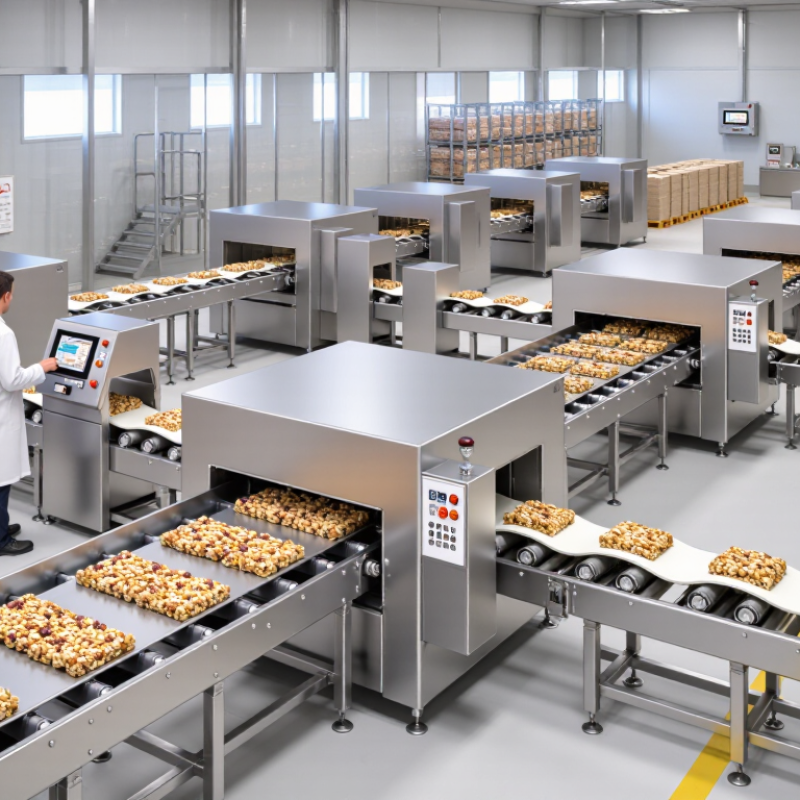
Cereal bar machines turn a mixed mass of grains, syrup, nuts, and fruit into consistent bars. A typical line includes dosing, mixing, slab forming, cooling, cutting, and wrapping. Heated syrup binds the ingredients, while pressure rollers create a uniform sheet. Cooling is critical. If the slab remains warm, cutting edges may collapse.
Grand View Research estimates that the global cereal bars market was worth about USD 11.7 billion in 2023, with growth expected through 2030. This expansion increases demand for reliable equipment, but capacity alone should not guide supplier selection. Global buyers should compare output rates, usually measured in kilograms per hour, with moisture control, recipe flexibility, and cleaning access. A machine rated at 1,000 kilograms per hour may perform poorly with sticky fruit pieces.
Small details matter.
During factory trials, buyers should request samples using their own formula. Check bar weight variation, surface cracking, cooling time, and wrapper alignment. Food processing guidance from the International Organization for Standardization emphasizes hygienic design, cleanable surfaces, and controlled production conditions. Stainless steel contact parts help, but poor conveyor access still creates practical problems.
Energy use also deserves attention. The International Energy Agency reports that industrial energy efficiency remains a major route for reducing manufacturing emissions. Servo-driven conveyors, insulated heating zones, and heat recovery can lower operating costs. Yet these features add complexity. More automation is not always better. Operators still need clear controls, spare parts support, and realistic training. A supplier’s sales promise may sound precise; the test report should be more convincing.
Cereal Bar Machine Throughput Ranges for Global Buyers
Cereal bar production lines commonly scale from pilot systems to high-output industrial lines. The chart shows indicative throughput ranges used in equipment planning and supplier RFQs; actual performance depends on recipe, bar size, syrup viscosity, cooling time, cutting format, and automation level.
Typical reference ranges: pilot lines 20–100 kg/h, small commercial lines 100–300 kg/h, medium lines 300–600 kg/h, and high-output lines 600–1,200 kg/h.
Criteria for Ranking the Top 10 Cereal Bar Machine Suppliers
Top 10 Cereal Bar Machine Suppliers for Global Buyers
The ranking begins with verified machine performance, not attractive brochures. Suppliers should provide measured output, bar-size tolerance, and test results from comparable cereal mixtures. A supplier claiming 1,000 bars per hour must explain product weight, operating speed, and expected downtime.
Food-contact materials matter. Stainless steel construction, accessible surfaces, and hygienic conveyor design reduce cleaning risks. Strong suppliers provide clear manuals, electrical specifications, spare-parts lists, and maintenance schedules. Their machines should support practical adjustments for syrup viscosity, cereal density, cooling time, and cutting pressure. Small details matter.
Technical support separates reliable suppliers from ordinary sellers. Ranking should consider installation guidance, operator training, response time, and local service coverage. Buyers should request customer references and inspect similar production lines when possible. Total cost also includes shipping, installation, energy use, tooling, and replacement parts. A lower purchase price may become expensive after repeated stoppages. Supplier communication should be precise and documented, especially for voltage, safety protection, and production capacity.
Independent testing improves credibility. Factory acceptance trials can reveal uneven coating, cracked bars, or difficult cleaning points before shipment. Still, no ranking remains perfect for every factory. A small producer may value flexible changeovers, while a large plant may prioritize continuous output. Capacity figures can also look better under ideal conditions. Real cereal recipes, seasonal humidity, and operator experience should influence the final decision.
Profiles of the Top 10 Cereal Bar Machine Suppliers
Global buyers often compare ten supplier profiles before selecting a cereal bar machine partner. A European turnkey builder may provide mixing, forming, cooling, cutting, and wrapping in one line. An Asian high-volume manufacturer often offers strong output at competitive costs. A specialist in small-batch equipment suits bakeries testing new recipes.
A modular supplier allows buyers to add conveyors or cooling tunnels later. A hygienic-design expert focuses on stainless-steel frames, tool-free access, and cleanable contact parts.
A packaging-line integrator connects bar machines with flow wrappers, metal detection, and checkweighers. A custom engineering workshop can adapt machines for sticky dates, nuts, or high-protein formulas.
A refurbished-equipment dealer may reduce investment, but spare-part availability needs careful checking.
Another leading profile is the automation-focused supplier, offering recipe storage, touchscreen controls, and production data. An energy-conscious builder may design insulated ovens, efficient drives, and reduced compressed-air use.
Each supplier should provide factory references, test-run videos, electrical specifications, and documented food-contact materials. Ask for samples made with your actual mixture.
Texture can change sharply with syrup temperature and cooling time. Proof matters.
Experienced buyers also inspect service response, operator training, installation scope, and warranty limits. A low quotation may exclude molds, shipping, commissioning, or replacement belts.
That gap matters. Some suppliers communicate well but underestimate local voltage, floor space, or sanitation procedures. This is a useful warning.
A reliable comparison should record capacity, bar dimensions, changeover time, cleaning access, and total ownership cost. Personal factory visits remain valuable, although remote audits can reveal much when records are complete.
Comparison of Capacity, Automation, Compliance, and Support
Top 10 Cereal Bar Machine Suppliers for Global Buyers
Comparison of Capacity, Automation, Compliance, and Support
Comparing ten cereal bar machine suppliers requires more than reading hourly output. Capacity figures often describe ideal products, not mixed recipes or irregular shapes. Ask for tested results using your actual syrup, grains, and bar dimensions. A reliable supplier should provide trial data, waste rates, and changeover times. A 600-kilogram-per-hour line may slow sharply during cleaning or product switching. Small details matter.
Automation levels also differ considerably. Basic lines may require manual feeding, cutting adjustments, and frequent weighing. Advanced systems can link dosing, forming, cooling, cutting, and packaging controls. Request a live demonstration, not only a polished video. Check whether operators can adjust settings from one interface. Does the system record temperature and pressure changes? These records support quality investigations. Still, automation is not always better. Complex controls can frustrate smaller teams.
Compliance should cover hygienic design, food-contact materials, electrical safety, and documented validation. Review certificates carefully. They should match the supplied configuration, not an older model. Check clean-in-place access, sealed bearings, drainage, and allergen changeover procedures. Support often decides whether production stays stable. Confirm installation supervision, operator training, spare-part availability, and remote diagnostic response times. Ask for references from factories with similar climates and production volumes. Service promises can sound impressive. Written response targets are safer. A practical audit may expose gaps that a sales meeting hides. I would also allow time for mistakes; rushed acceptance testing can leave expensive problems unnoticed.
How to Choose and Purchase from an International Supplier
Top 10 Cereal Bar Machine Suppliers for Global Buyers
How to Choose and Purchase from an International Supplier
Choosing an international cereal bar machine supplier requires more than comparing catalog prices. In factory evaluations, I check forming accuracy, cutting stability, cleaning access, and spare-part response times. A machine may produce 120 bars per minute, but unstable feeding can create costly waste. Ask for production videos, test records, and samples using your actual recipe. Ask for proof.
Market data also supports careful planning. Grand View Research reports that the global cereal bars market was valued at approximately USD 15.2 billion in 2022, with continued growth expected through 2030. This growth increases demand for flexible equipment, especially machines handling different shapes, coatings, and bar weights. Confirm whether the supplier can adjust pressure, temperature, and conveyor speed without lengthy changeovers.
International purchasing adds practical risks. The World Bank’s 2023 Logistics Performance Index assessed 139 economies across customs, infrastructure, logistics services, and delivery timeliness. Use these factors when reviewing a supplier’s export history. Request Incoterms, installation requirements, electrical specifications, warranty limits, and spare-part lead times in writing. Check food-contact materials and documented hygiene procedures. Remote acceptance testing is useful, but it is not perfect. A live trial at the supplier’s facility may reveal vibration, uneven cutting, or difficult cleaning points. Budget for operator training, local commissioning, import duties, and one year of critical spare parts. A cheaper quotation can become expensive after installation.