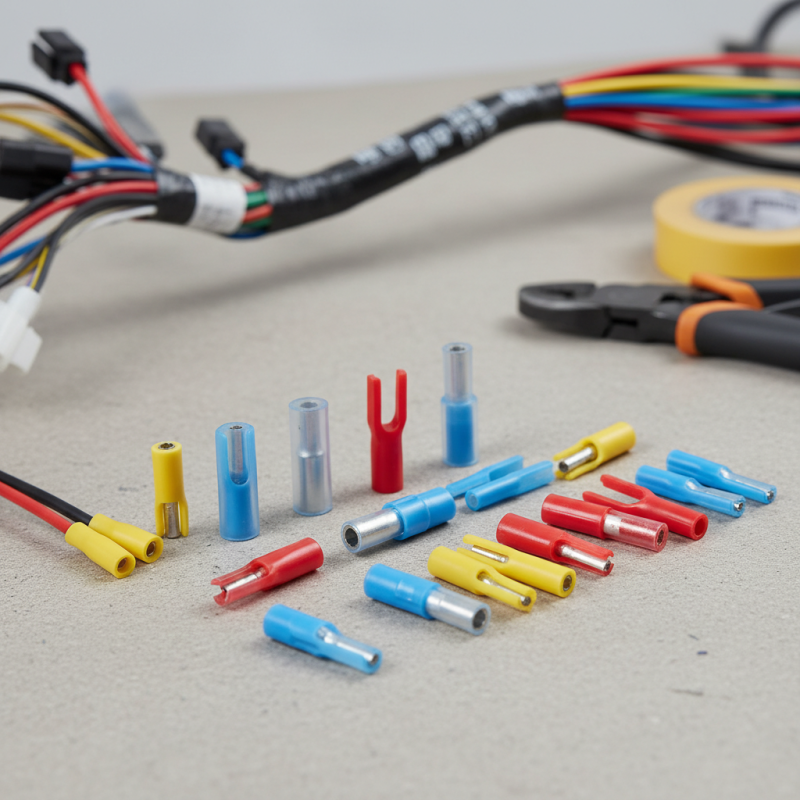
What is Nylon Insulated Terminal and Its Applications?
Nylon Insulated Terminals are crucial in electrical connections. They feature a nylon coating that provides a durable and insulated interface. This coating enhances resistance to environmental factors and prevents corrosion.
These terminals are widely used in automotive and industrial applications. They help ensure safe and reliable connections in various settings. For instance, in vehicles, they safeguard against moisture, heat, and vibration. However, it is essential to choose the right size and type for specific applications to avoid complications.
While Nylon Insulated Terminals offer significant benefits, there are areas for improvement. Some users may overlook the installation process, compromising their effectiveness. Proper usage guidelines should always be followed to fully leverage their advantages.
Definition and Composition of Nylon Insulated Terminals
Nylon insulated terminals are critical components in electrical connections. They are designed to provide strength and insulation. Made from nylon, these terminals resist heat and offer durability. Nylon is a synthetic polymer known for its resilience.
The composition of nylon insulated terminals typically includes a metal core and a nylon shell. The metal core ensures electrical conductivity. Meanwhile, the nylon outer layer protects against abrasion and environmental factors. This combination enhances performance in various settings.
These terminals find applications in automotive, electronics, and industrial machinery. Their robust nature makes them ideal for high-stress environments. However, improper installation can lead to connectivity issues. Ensuring secure connections is vital.
Proper handling of these terminals can help avoid potential failures. Regular inspections can catch wear and tear early.
Advantages of Using Nylon Insulated Terminals
Nylon insulated terminals are becoming popular in various electrical applications. These terminals provide excellent insulation and are resistant to heat and moisture. This makes them suitable for environments where wires face harsh conditions. They help prevent shorts and electrical failures, ensuring safety in critical systems.
Using nylon insulated terminals has several advantages. They are lightweight and durable, which makes them easy to install. The terminal's insulation does not degrade easily, contributing to long-lasting performance. Moreover, they resist chemicals and UV light exposure, which is crucial for outdoor applications. However, some users may overlook their limits in extreme temperatures. While they perform well in heat, exposure to frigid conditions may lead to brittleness.
In addition, nylon insulated terminals offer good flexibility. This makes them adaptable for various wire sizes and configurations. Sometimes, installers might struggle with improper connections. It’s essential to match the terminal size with the wire gauge accurately. Mismatched connections can lead to issues over time. Despite these challenges, the benefits of using nylon insulated terminals outweigh potential drawbacks.
Common Applications of Nylon Insulated Terminals in Electrical Systems
Nylon insulated terminals play a critical role in electrical systems across various industries. These terminals ensure secure connections while providing protection against environmental factors. Common applications include automotive wiring, industrial machinery, and consumer electronics. Their durability and resistance to heat and chemicals make them ideal for challenging environments.
In automotive applications, nylon insulated terminals are widely used in harnesses and connections. Reports indicate that approximately 75% of vehicles utilize these terminals for reliable electrical performance. This is essential as vehicles become more complex, integrating advanced electronic systems. The automotive sector benefits immensely from the lightweight nature of nylon, improving overall vehicle efficiency.
Tips: Choosing the right terminal is vital. Incorrect selection may lead to failure in connections. Always assess the working environment for temperature and exposure to moisture.
Another key area is industrial machinery. Nylon insulated terminals are necessary for connecting components in harsh conditions. They prevent short circuits and enhance safety. However, it’s important to consider the installation process carefully. If installed improperly, these terminals may not provide the intended protection.
Tips: Regular inspections are important. Look for signs of wear or corrosion. Proactive maintenance can prevent costly downtime.
Installation and Maintenance Practices for Nylon Insulated Terminals
Nylon insulated terminals are widely used in electrical applications. They provide good insulation and protect connections from environmental factors. Installing these terminals requires careful attention to detail. Poor installation can lead to unreliable connections, causing electrical failures.
Proper installation begins with stripping wires to the right length. Use a wire stripper for accuracy. Insert the stripped wire into the terminal. Ensure it fits snugly. After inserting, crimp the terminal using a crimping tool. This secures the wire in place. It's important not to over-crimp, as this can damage the wire.
Maintenance is equally important. Regular inspections can help identify issues early. Look for signs of corrosion or damage. If corrosion is present, replace the terminal. Routinely check connections for tightness. Loose connections can lead to overheating. Adjust as necessary to ensure a safe, efficient system.
Nylon Insulated Terminal Applications Overview
Comparison with Other Types of Insulated Terminals
Nylon insulated terminals are widely used in various electrical applications. They provide excellent durability and resistance to wear. However, many users may not realize that they differ significantly from other types of insulated terminals.
A thorough comparison reveals that nylon terminals outperform PVC insulated varieties in harsh environments. According to industry studies, nylon offers better resistance to heat and chemicals. For example, a study by the National Electric Manufacturers Association shows that nylon terminals can withstand temperatures up to 105°C. In contrast, PVC terminals typically break down at around 80°C. This difference is crucial in sectors such as automotive wiring and industrial machinery.
However, not all installations require the robust properties of nylon. In low-stress applications, more economical options might be adequate. PVC terminals are lighter and easier to install, making them suitable for basic home wiring tasks. Yet, these simpler terminals may not hold up over time. The long-term performance of nylon terminals often justifies their higher upfront cost. Still, users must evaluate their specific needs. Ultimately, the choice between nylon and other types of insulated terminals should be guided by the operational context and required durability.
What is Nylon Insulated Terminal and Its Applications? - Comparison with Other Types of Insulated Terminals
| Type of Insulated Terminal | Material | Temperature Rating (°C) | Voltage Rating (V) | Typical Applications |
| Nylon Insulated Terminal | Nylon | 105 | 600 | Automotive, Electronics, Industrial |
| PVC Insulated Terminal | PVC | 80 | 300 | General Wiring, Home Appliances |
| Heat Shrink Insulated Terminal | Polyolefin | 125 | 600 | Marine, Aerospace, Outdoor Applications |
| Silicone Insulated Terminal | Silicone | 200 | 600 | High Temperature Applications, HVAC |