Electronic Contract Manufacturing Service Provider in California

Top AI Floor Cleaner Manufacturers in China

China’s floor-care sector brings together robotics, sensors, software, and practical manufacturing. For buyers, an Ai Floor Cleaner is more than a machine that moves across a room. It must detect edges, manage water, handle different surfaces, and return to its dock reliably. Small details matter. A brush tangled with hair or a damp streak on tile can reveal more than a polished product photo.

AI researcher Andrew Ng has described artificial intelligence as “the new electricity.” His observation helps frame this market, though it does not guarantee that every cleaning device uses AI meaningfully. Buyers should examine navigation methods, obstacle detection, cleaning modes, battery performance, and after-sales support. They should also request clear test conditions and confirm whether advertised features apply to the exact model offered.

This overview of Top AI Floor Cleaner Manufacturers in China introduces companies through practical criteria, including product engineering, manufacturing capabilities, and communication with overseas buyers. Specifications can change between versions, and marketing language may blur important differences. That deserves a closer look. A useful comparison should separate documented features from claims that still need verification. No single supplier will suit every project; floor type, target market, order volume, and service expectations all influence the choice.
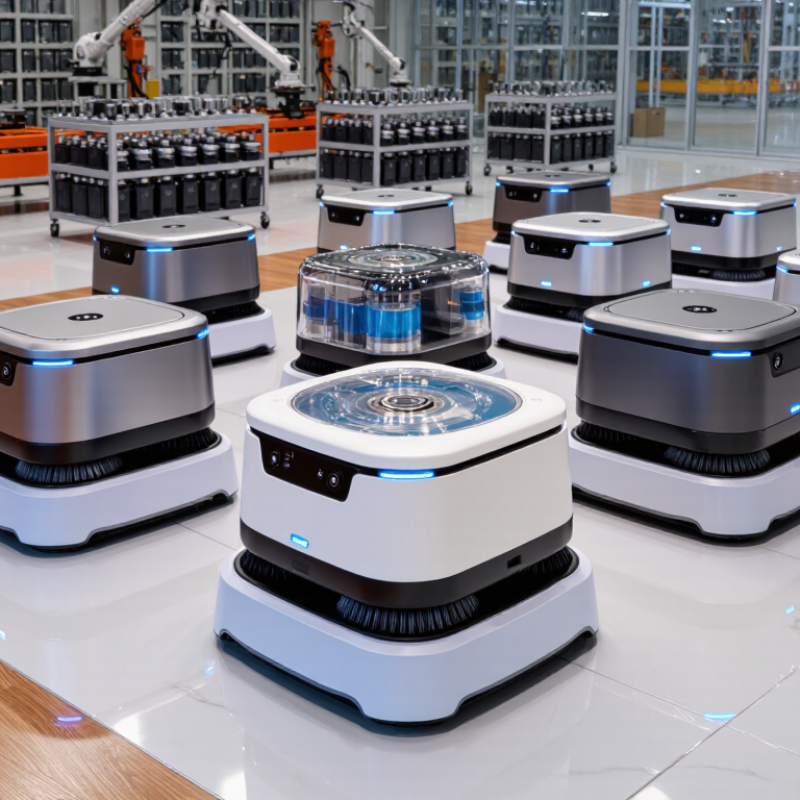
Top AI Floor Cleaner Manufacturers in China

Defining AI Floor Cleaners and Their Role in Modern Cleaning

An AI floor cleaner combines sensors, software, and cleaning hardware to make decisions while moving through a space. Cameras or other sensors can help it identify walls, furniture, and floor edges. Mapping software then plans a route instead of relying only on random movement. Some models also adjust suction or water flow to suit different surfaces. The exact features vary, so “AI” should not be treated as a guarantee of better cleaning.

In modern homes and workplaces, these machines can handle routine dust, crumbs, and light stains with less hands-on effort. They are useful under tables and around chair legs, where dirt often collects. Still, they cannot judge every situation perfectly. A dark rug, loose cable, or reflective surface may confuse a sensor. Human checks remain important.

Tips: Clear cables before cleaning. Empty the dust bin regularly, and wipe sensors with a soft, dry cloth. Test wet-cleaning settings on a small area first. Small habits help.

For buyers comparing manufacturers in China, examine how clearly a product explains its navigation, obstacle handling, and maintenance needs. Look for practical test details, not just broad claims about intelligence. A cleaner may work well in an open room but struggle in a crowded one. That gap matters.
Core Technologies Behind AI-Powered Floor Cleaning

China-based AI floor-cleaner manufacturers build autonomy from several sensor inputs, not one camera. LiDAR can map corridors, while depth cameras help detect shoes, cables, and low obstacles. Wheel encoders and inertial sensors estimate movement when glass or changing light disrupts visual readings. The system combines these inputs through simultaneous localization and mapping, or SLAM, to plan routes and revisit missed areas.

The International Federation of Robotics reported 205,000 professional service robots sold worldwide in 2023, up 30% year over year, in World Robotics 2024. This figure covers many robot types, not floor cleaners alone. That distinction matters. In a working building, edge processors can respond to obstacles locally, while cleaning sensors may adjust suction or water flow when they detect heavier soil. A damp patch near a doorway still needs careful judgment.

Good navigation is not perfect. Reflective floors can confuse sensors, and crowded spaces change by the hour. Operators should check maps, restricted zones, and cleaning logs rather than trust a dashboard blindly. Small details count: a loose charging cable or a chair moved after mapping can disrupt a route.

Top AI Floor Cleaner Manufacturers in China — Core Technologies Behind AI-Powered Floor Cleaning
Technology Area Common Technical Approaches Role in Floor Cleaning Practical Evaluation Criteria
Localization and Mapping Simultaneous localization and mapping (SLAM) using combinations of laser range sensors, cameras, inertial sensors, and wheel encoders. Estimates the cleaner’s position and builds or updates a map to support route planning and room-level navigation. Test map consistency, position recovery after relocation, coverage, and performance in changing light or furniture layouts.
Obstacle Detection Camera-based recognition, depth sensing, laser ranging, infrared sensing, and contact bump sensors; implementations vary by product. Detects obstacles and helps the cleaner slow down, steer around objects, or stop when a collision risk is identified. Check detection and avoidance across different obstacle sizes, floor conditions, lighting, and approach angles.
AI-Based Object Recognition Machine-learning models process image or sensor data to classify objects. Recognition results depend on the model, training data, and sensor configuration. Can help distinguish selected household objects from general obstacles and inform cleaning or avoidance decisions. Evaluate false detections, missed objects, processing latency, and performance on objects not represented in test examples.
Path Planning and Coverage Map-based route planning, room segmentation, boundary following, and algorithms that select or revise cleaning paths. Organizes movement to cover accessible floor areas while reducing unnecessary travel and repeated passes. Measure coverage, missed areas, repeated passes, time to complete a defined area, and recovery from blocked routes.
Cleaning-Mode Control Software-controlled adjustment of movement and cleaning settings; some systems use sensor input to trigger mode changes. Coordinates navigation with floor-cleaning actions, such as following a selected route or responding to detected conditions. Compare cleaning results on representative surfaces and test whether mode changes occur as specified.
Edge Computing and Control On-device processors run navigation, sensor-fusion, and recognition tasks; available processing capacity varies by design. Enables local responses to sensor data without requiring every real-time decision to be sent to a remote service. Assess response time, reliability during network outages, thermal behavior, and software update support.
Battery and Power Management Rechargeable battery packs, battery-management systems, charge monitoring, and software-based power control. Monitors battery conditions and supports charging and cleaning-session management. Verify runtime under defined test conditions, charging behavior, battery-status reporting, and applicable electrical safety requirements.
Connectivity and Remote Features Wireless networking and companion software may support setup, status reporting, map management, or remote commands. Provides user-facing control and information when supported by the product and its software. Test connection stability, access controls, data-handling disclosures, and core operation when the network is unavailable.
System Validation Repeatable tests for navigation, obstacle handling, coverage, cleaning performance, durability, and electrical safety. Checks how sensing, software, mechanical components, and cleaning systems perform together in real use. Use documented test conditions, representative floors and obstacles, repeat runs, and relevant product-safety standards.

How Chinese Manufacturers Design and Produce AI Floor Cleaners

Chinese manufacturers typically begin AI floor cleaner development by studying room layouts, floor materials, and everyday obstacles. Design teams translate those needs into chassis dimensions, wheel placement, brush systems, and sensor positions. Cameras, lidar, or other sensors may support mapping and obstacle recognition, depending on the product. The software then turns sensor readings into routes, cleaning settings, and responses to objects. A cable is a different challenge from a chair leg.

Prototypes are tested on tile, wood, and low-pile carpet, with thresholds and corners included. Engineers check whether brushes collect dust, wheels maintain traction, and the machine returns to its dock. Some problems appear only after repeated runs. A tidy test room can hide real household clutter. After design revisions, production may involve molded housings, assembled electronics, firmware loading, and sensor calibration. Quality teams inspect units and run functional checks before packing. Test results should guide design changes, though rushed schedules can make that loop less thorough than it needs to be. Manufacturing quality depends on careful process control, not just sophisticated navigation software.

Battery Chemistry Choices in AI Floor Cleaner Design

Nominal voltage per cell is a key input when designing a floor cleaner’s battery pack, power system, and charging controls.

Typical nominal cell voltages: lithium-ion 3.6 V, lithium iron phosphate (LFP) 3.2 V, nickel-metal hydride (NiMH) 1.2 V, and nickel-cadmium (NiCd) 1.2 V. Actual pack voltage depends on the number of cells connected in series.

Leading AI Floor Cleaner Manufacturers in China

China’s leading AI floor cleaner manufacturers bring together robotics, sensors, software, and large-scale production. Strong manufacturers do more than assemble a machine. They test how it handles tiled kitchens, narrow hallways, pet hair, and damp patches. Look for clear details about navigation, obstacle detection, battery life, water control, and replacement parts. These details help buyers compare real operating performance, not just impressive specifications. Ask how products are tested across different floor types. A polished demonstration is useful, but it cannot show every weakness.

Tips: Request sample units and a written test plan. Check cleaning results near chair legs and along wall edges. Ask how quickly worn brushes and filters can be replaced.

Manufacturing capability matters, but so does honest communication. A reliable supplier should explain what its AI can and cannot recognize, and how software updates are managed. It should also provide consistent quality checks and practical user documentation. Some models may miss dark cables or struggle with clutter. That is worth discussing early. Buyers should compare test records, service response, and customization limits before choosing a production partner. A factory may excel at volume yet need improvement in fine-edge cleaning; that trade-off deserves careful review.

Comparing Manufacturers by Features, Quality, and Market Reach

When comparing AI floor cleaner manufacturers in China, look beyond advertised suction power. A useful model should map room edges, recognize cables, and adjust water flow across tile and wood. Ask how it handles a chair leg or a dark rug, not only an open showroom floor. Small tests matter. A clear maintenance schedule and replaceable brushes can reveal more about product quality than a long feature list.

Build quality is easier to judge through details: wheel alignment, tank seals, filter access, and whether the dock is simple to clean. Request test reports and warranty terms, then check whether they apply to the exact model offered. A polished demo is not proof of long-term reliability. It can still be helpful. Market reach also deserves careful checking. Manufacturers with established export support may offer clearer manuals, spare-part channels, and responsive service, while smaller suppliers may provide more customization. Neither advantage guarantees a better machine. Compare delivery history, available service coverage, and realistic production capacity. Some information may be difficult to verify; that uncertainty should count in the assessment.