Electronic Contract Manufacturing Service Provider in California

How to Choose a Smart Parking System in 2026?

Choosing a Smart Parking System in 2026 is not simply a matter of buying the newest cameras or sensors. The right choice depends on your site, users, and daily operating needs. A hospital with short-stay visitors has different demands from a downtown garage or university campus. Small details matter.

INRIX Research’s 2017 report, “Parking Pain in the U.S., U.K. and Germany,” estimated that U.S. drivers spent an average of 17 hours a year searching for parking. That figure is dated, so it should be treated as context, not a forecast for 2026. McKinsey Global Institute’s 2018 report, “Smart Cities: Digital Solutions for a More Livable Future,” projected that smart mobility applications could reduce average commute times by 15 to 20 percent. That is a city-level potential, not a guaranteed result from parking technology alone. The evidence has limits.

A practical evaluation should begin with real site data: occupancy by hour, entry and exit queues, payment failures, and time spent locating spaces. Then compare sensor accuracy, camera performance in poor weather, integration with existing payment tools, accessibility, and ongoing support. Ask vendors to demonstrate the system using your own layout, not just a polished presentation. Check how it handles a full lot, a blocked sensor, or a network outage. These are ordinary moments, but they reveal a lot.

The best option is one staff can operate and drivers can understand without guesswork. Request references from sites with similar traffic and verify reported results independently. A dashboard can look convincing. Measured performance matters more. No system removes every delay, and a pilot may expose assumptions that need revisiting. That is useful evidence, too.
How to Choose a Smart Parking System in 2026?

What a Smart Parking System Is and How It Works

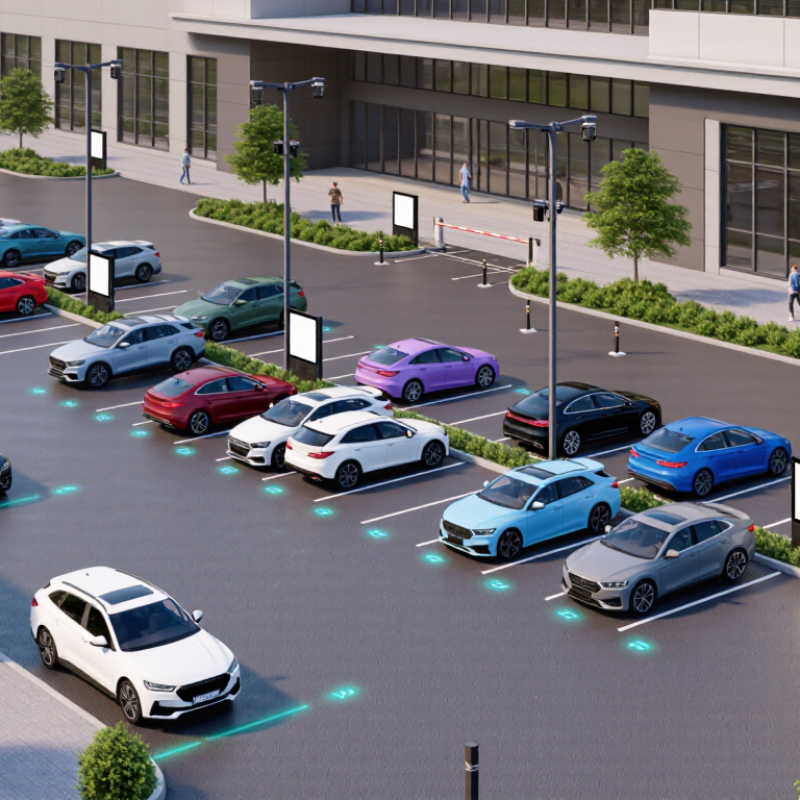
A smart parking system combines bay sensors or cameras, network connections, and software to estimate which spaces are open. A sensor might detect a parked car through magnetic changes or reflected signals. The system sends that reading to a gateway, then to a management platform. Drivers may see availability on a street sign or mobile map. Operators can also monitor occupancy and adjust pricing or enforcement workflows.

The process is simple on screen. Behind it, data can be delayed or wrong. A blocked sensor, weak signal, or camera view obscured by a delivery van may show an empty space that is occupied. Still, sensors lie sometimes. A dependable system checks readings for gaps and flags equipment faults, rather than treating every status as certain. Clear rules for data retention and access matter, too.

The 2014 SFpark pilot evaluation reported a 43 percent reduction in average parking search time in its study areas. That is useful evidence, not a guarantee for every city: street layouts, driver habits, and sensor coverage differ. When comparing systems in 2026, ask how often occupancy data refreshes, how faults are detected, and whether the platform works with existing signs and payment tools. Then test it on a few blocks through busy and quiet periods. Real streets are messy. The test should be, too.

Which Parking Challenges the System Must Address

A smart parking system should address the problems drivers actually face, not just display a space count. At a busy garage, a ten-minute delay at the entrance can create a queue that reaches the street. Drivers also need dependable directions to open spaces, clear information about height limits, and a simple way to handle payment or permit access. Stale occupancy data can send cars toward full floors. That matters.

The system should also support different users, including visitors, staff, and people who need accessible spaces. Check how it behaves when sensors lose connection, lighting changes, or traffic surges after an event. Ask how quickly staff can spot errors and update signs. A polished dashboard is not proof of reliable operation. I would not assume every sensor works equally well in every layout; test it on the site itself.

Tips: Observe the car park during its busiest hour before comparing systems. Test a real route from entrance to space, including payment and exit. Ask for uptime records, data-update intervals, and a clear outage procedure. If staff need several workarounds, the system may be solving the wrong problem.

How to Choose a Smart Parking System in 2026? - Which Parking Challenges the System Must Address

Parking challenge What the system should address Capabilities to look for How to verify it Useful measures
Drivers cannot find an available space Unclear availability can increase circulation inside a facility and frustrate drivers. Space or zone occupancy detection, live availability updates, and clear signs or app guidance. Compare system status with a manual count across representative spaces, floors, and busy periods. Occupancy agreement rate; time from a space-status change to the displayed update.
Search traffic and queues at entrances or exits Congestion can occur when arrivals, departures, payment, or access checks are slow. Real-time arrival and occupancy monitoring, configurable routing, and efficient access and payment workflows. Observe peak-period traffic and review transaction and queue records before and after a pilot. Queue length; entry and exit processing time; time spent searching for parking.
Different users need different types of parking Accessible spaces, loading areas, permits, and other restricted spaces must be identified and managed correctly. Space categories, configurable rules, clear wayfinding, and suitable enforcement workflows. Test each space category and rule with authorized staff; confirm that signs and digital guidance agree. Category and rule accuracy; number of unresolved exceptions; availability of accessible routes.
Reservations do not match on-site availability Overbooking, late arrivals, and no-shows can leave drivers without the expected space. Reservation inventory, arrival validation, configurable grace periods, and clear cancellation or no-show rules. Run test bookings through arrival, change, cancellation, and no-show scenarios. Reservation fulfillment rate; booking-to-entry match rate; no-show rate.
Payment and access processes are confusing Unclear rates, payment failures, or mismatched access records can delay exit and create disputes. Clearly displayed tariffs, multiple suitable payment options, transaction records, and a process for handling failed payments. Test typical and exception journeys, including a payment retry, receipt, and refund or dispute procedure. Payment completion rate; transaction processing time; payment-related support requests.
Systems do not share reliable data Separate access, payment, reservation, and facility systems can produce inconsistent records or duplicate work. Documented interfaces, data export, role-based access, and integration support for the site's existing systems. Review interface documentation and test end-to-end data exchange in a non-production environment. Successful data exchange rate; synchronization delay; number of manual corrections.
Hardware or network outages disrupt operations A sensor, connectivity, or power failure can make availability information or access controls unreliable. Health monitoring, alerts, documented offline procedures, backup power planning, and recoverable records. Review incident procedures and simulate a device or network outage with the operations team. Service availability; incident detection time; recovery time; unresolved device faults.
Privacy and security risks are not controlled Vehicle, payment, account, or usage data needs appropriate protection and access controls. Data minimization, encryption, role-based permissions, audit logs, retention controls, and a documented incident process. Review data flows, retention settings, security documentation, and the responsibilities of each party. Access review completion; log coverage; retention-policy compliance; incident response readiness.
Electric-vehicle charging spaces are hard to manage Drivers need to distinguish charging availability from ordinary parking availability and understand charging rules. Separate charging-space status, clear charger and parking rules, and integration with charging operations where required. Check that space status, charger status, signage, and any charging session information are consistent. Charger availability; occupied-but-not-charging time; charging-space turnover.
Operators cannot measure performance or improve service Without dependable reporting, it is difficult to identify demand patterns, recurring faults, or underused capacity. Dashboards, downloadable reports, event histories, and configurable metrics for different user roles. Compare sample reports with source records and confirm that managers can answer routine operational questions. Occupancy by time period; utilization; revenue reconciliation; incident and support trends.

Set numeric targets for accuracy, response time, availability, and recovery during a site-specific pilot. Results depend on facility layout, hardware, network conditions, operating rules, and the way each measure is defined.

How to Compare Sensors, Software, and Payment Features

When choosing a smart parking system in 2026, compare how its sensors behave in your actual site conditions. Ask for detection accuracy by space, not just a general percentage. A sensor may miss a low vehicle or report an occupied space after a car leaves. Rain, dust, and tight garage ceilings can also affect performance. Test it live. Watch several spaces during busy and quiet periods, then compare readings with a manual count. Small details matter.

Software should make those readings useful to drivers and operators. Check whether the map updates promptly and works on older phones with weak connections. Review dashboards for false occupancy alerts, maintenance logs, and clear reports by time of day. Ask how data is stored, who can access it, and what happens during an outage. A polished demo can hide awkward workflows. Have staff try routine tasks, such as correcting a space status, before committing.

Payment features deserve the same practical scrutiny. Confirm that rates, time limits, and receipts are easy to understand on screen. Check support for common payment methods, refunds, and disputes, along with any extra transaction charges. Test a failed payment and a dropped connection; both happen. A system that handles these cases calmly may reduce confusion at the curb, though no setup removes every parking complaint. Consider a small pilot and compare support requests before expanding.

How to Evaluate Costs, Security, and Integration Needs

How to Choose a Smart Parking System in 2026?
How to Evaluate Costs, Security, and Integration Needs

Choosing a smart parking system in 2026 starts with the full cost, not the advertised device price. Ask for a breakdown of cameras or sensors, installation, network upgrades, software fees, support, and replacement parts. A site walk can reveal details a spreadsheet misses: weak signal in a concrete garage, glare at an entrance, or power outlets far from sensor locations. Costs vary. Compare three- to five-year ownership estimates, including staff time spent handling payment disputes and correcting occupancy data. Leave room for downtime during installation; even a short closure can affect daily revenue.

Security and integration deserve the same scrutiny. Request a clear data map: what is collected, where it is stored, who can access it, and how long it is retained. Check encryption, role-based access, audit logs, backup routines, and the process for reporting incidents. Ask for evidence, not assurances. For integration, test how the system exchanges data with existing access gates, payment tools, permits, and building dashboards. Run a small pilot in one busy zone, then compare sensor counts with manual observations during peak and quiet periods. The numbers may disagree. That is useful, but someone must own the cleanup process. A neat dashboard is not proof of reliable operations, and integration work is often underestimated.

How to Choose a Smart Parking System in 2026?

Suggested evaluation weights for comparing costs, security, integration, and ongoing operations.

Treat these percentages as an adjustable planning framework, not market survey results. Compare total ownership costs, review security controls and data practices, test integration with your existing payment and access systems, and account for support and maintenance before making a decision.

How to Select and Implement the Right System for 2026

Choosing a smart parking system in 2026 starts with the site, not a feature list. Count entrances, stalls, accessible spaces, and peak-hour queues. Note where cars hesitate, such as a dim ramp or confusing turn. These details help determine whether cameras, bay sensors, or a combination will suit the property. Ask vendors to explain accuracy in rain, glare, and crowded conditions, then request a live demonstration. A polished dashboard proves little if drivers still circle.

Set practical requirements before installation. Check that the system can connect with existing gates, payment tools, and property software. Confirm how it handles network outages and who can access stored vehicle data. Keep retention periods clear. Start with one busy zone, and test signs, alerts, and staff procedures during real traffic. Test it live. Record entry times, occupancy, and failed reads for several weeks.

A common mistake is treating installation as the finish line. It is not. Compare sensor counts with manual spot checks, and review complaints alongside occupancy reports. If results disagree, investigate lighting, camera angles, or changing traffic patterns before expanding. No system removes every bottleneck. Leave room in the budget for calibration, staff training, and maintenance; these costs are easy to underestimate. A useful choice is one the site team can operate reliably, even on an unusually busy day.