Electronic Contract Manufacturing Service Provider in California

How to Choose the Right Gasket Rings in 2026?

Choosing the right Gasket Rings in 2026 starts with the conditions they must handle, not the lowest quoted price. A ring that performs well in a water line may fail in a system carrying oil, steam, or cleaning chemicals. Check the fluid, operating temperature, pressure, and whether the joint faces movement or vibration. Small details matter.

Material selection is only part of the decision. Confirm the inner and outer diameters, thickness, and required compression against the equipment drawings or measured flange. Then review the manufacturer’s technical data for chemical compatibility and service limits. A soft elastomer may seal uneven surfaces, while a harder material may suit a different load or temperature range. There is no universal winner. The actual flange finish and bolt loading can change the result.

Ask suppliers for traceable specifications, test information where relevant, and guidance on storage and installation. Compare those details with the equipment maker’s recommendations, especially for critical or high-temperature service. Avoid assuming that a familiar color or material name guarantees compatibility. It does not. Even careful specifications can leave questions, particularly when fluids vary or equipment is old. That uncertainty deserves a closer review, not a confident guess. A sound choice balances fit, material, operating limits, and reliable documentation.
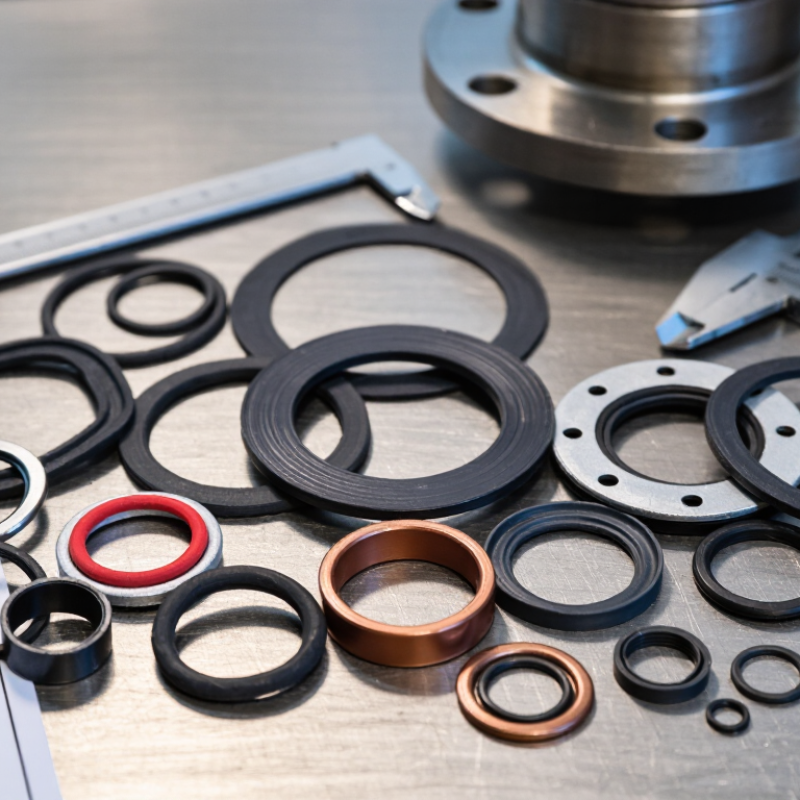
How to Choose the Right Gasket Rings in 2026?

Understand the Function and Operating Conditions of Gasket Rings

How to Choose the Right Gasket Rings in 2026?

A gasket ring creates a seal between mating surfaces, helping contain fluids or gases and prevent leakage. Its performance depends on more than material alone. Start by identifying the fluid, operating pressure, and normal temperature range. Also note brief temperature spikes and pressure changes. A ring suitable for steady service may struggle during frequent start-stop cycles. Small details matter.

Check the sealing surfaces and joint design. Scratches, uneven compression, or poor alignment can create leak paths, even with a suitable gasket. Consider whether the joint will be opened for maintenance and how much compression it can safely accept. Consult equipment documentation and material compatibility data; operating limits vary by product and installation. It is easy to overlook these details when replacing a familiar part.

Tips: Record the actual service conditions before ordering. Check fluid compatibility, pressure, temperature, and dimensions against reliable specifications. Keep surfaces clean and inspect them for damage before fitting the ring. Do not assume the old gasket was the right choice. If conditions are uncertain, verify them with a qualified engineer.

Identify the Fluid, Temperature, and Pressure Requirements

How to Choose the Right Gasket Rings in 2026?
Identify the Fluid, Temperature, and Pressure Requirements

Start with the fluid, not the gasket material you already have on hand. Check its exact composition, concentration, and any cleaning chemicals used in the line. Water, oils, solvents, and process mixtures can affect materials differently. A compatibility chart is useful, but confirm its limits against the gasket supplier’s technical data.

Record normal and peak temperatures, including brief heating during startup or cleaning. Then check operating pressure, pressure spikes, and how often the system cycles. A ring that suits steady conditions may not seal well through repeated changes. Flange finish, alignment, and bolt loading matter too; a good gasket cannot correct damaged or uneven faces. Small details matter. I would still verify the final choice against the full joint design, since a material name alone does not guarantee a reliable seal.

Tips: Write down the fluid, temperature range, and maximum pressure before comparing options. Include cleaning conditions. Ask a qualified engineer or supplier to review unusual mixtures, severe cycling, or uncertain flange dimensions. A short review now can prevent leakage and rework later.

How to Choose the Right Gasket Rings in 2026? — Identify the Fluid, Temperature, and Pressure Requirements

Compare the fluid first, then check whether the expected operating and peak temperatures fall within the material’s range. These are approximate, representative ranges—not guaranteed limits; formulation, fluid compatibility, pressure, flange condition, and operating cycles all affect suitability. A material alone does not determine a gasket’s pressure rating, so verify the rating for the specific gasket design and joint.

Compare Gasket Materials, Shapes, and Sealing Properties

Choosing a gasket ring begins with the fluid, temperature, pressure, and the surfaces it must seal. EPDM often suits water and outdoor exposure, while nitrile rubber is commonly selected for many oil-based services. Silicone handles a broad temperature range, but it may not fit every chemical or high-pressure application. PTFE offers wide chemical resistance, though sustained compression can cause it to deform over time. Check compatibility against the actual medium and operating conditions, not just a material chart.

Shape matters just as much. A flat ring works between two faces, such as a pipe flange, when the surfaces and bolt load are even. An O-ring sits in a groove and seals through controlled squeeze. Too little compression can leave a leak path; too much can damage the ring. Fit matters. Measure the groove, ring cross-section, and available space. Surface scratches and uneven tightening can defeat a sound material choice.

In maintenance, the small details are easy to overlook. A ring that seals during a cool startup may behave differently after repeated heat cycles or exposure to cleaning fluid. Leave room for movement, and check whether the seal must resist pressure from one direction or both. Even a careful selection can be wrong if the real operating conditions differ from the specification. A small trial under representative conditions can reveal problems before routine use.

Check Dimensions, Standards, and Equipment Compatibility

How to Choose the Right Gasket Rings in 2026?

Check Dimensions, Standards, and Equipment Compatibility

Start with the flange, not the old gasket. Measure the inner and outer diameters, thickness, bolt-hole pattern, and flange facing. A used gasket may have compressed or distorted, so it can give misleading dimensions. Small errors matter. Match the ring to the equipment’s pressure, temperature, and process fluid, then confirm the material’s limits in its technical data.

Check the applicable standard before ordering. ASME B16.20 covers metallic gaskets, while ASME B16.21 covers nonmetallic flat gaskets. These standards help define dimensions and construction, but they do not guarantee suitability for every service condition. The U.S. Department of Energy’s 2016 Improving Steam System Performance sourcebook reports that steam systems account for about 30% of energy used in U.S. manufacturing. That figure is a useful reminder: gasket selection can affect system reliability and energy performance. Still, a standard-size ring may not suit a worn flange or unusual equipment.

Tips: Compare the gasket drawing with the equipment manual and flange marking. Check surface condition, bolt spacing, and the specified tightening procedure. If records are incomplete, pause and verify measurements on the actual flange; guessing is tempting, but rarely a good specification method.

Evaluate Installation Needs, Service Life, and Replacement Planning

A gasket ring should fit the joint and the job, not just the nominal pipe size. Check the groove dimensions, surface condition, and required compression before ordering. A ring that is too thick may twist during installation; one that is too thin can leave a leak path. Small details matter. Confirm that the material suits the fluid, temperature, and cleaning chemicals. If any of these conditions are uncertain, verify them against equipment records or a qualified supplier’s data.

Installation affects service life. Clean the seat with a lint-free cloth and remove old residue without scratching the sealing surface. Keep the ring free of grit, and avoid stretching or rolling it into place. Tighten fasteners in the specified sequence and to the equipment maker’s torque guidance. More force is not always better. Over-compression can damage a seal, though it is easy to overlook when a joint still appears secure.

Plan replacement around actual duty, not a calendar guess alone. Record the installation date, operating conditions, and any leaks, swelling, cracks, or flattening found during inspection. Use those observations to set a review interval, then adjust it after maintenance findings. A ring may need replacement sooner after heat spikes or frequent shutdowns. Waiting until leakage appears can disrupt operations, but replacing every ring too early also wastes sound material. A fixed schedule is a starting point, not proof that the seal is healthy.