Choosing the best Powder Feeder is rarely a simple matter of comparing prices or catalog capacities. The right decision begins with the powder itself. Particle size, moisture, bulk density, flowability, and electrostatic behavior can change performance dramatically. A fine powder may bridge inside a hopper, while a heavier material may flood through the outlet. Small differences matter.
Andrew W. Jenike, a pioneer in bulk-solids engineering, expressed a useful principle: “Powder flow is not a material property; it is a system property.” His observation remains practical today. A feeder must work with the hopper, discharge point, control system, and production speed. A loss-in-weight Powder Feeder may suit precise dosing, while a volumetric model may be adequate for stable materials and simpler lines. Neither option is automatically better.
Look closely at real operating conditions. Will the feeder run continuously? Does the process require gram-level accuracy? Can operators clean it without tools? These questions often reveal more than technical brochures. Watch for bridging, pulsation, dust leakage, and unstable refill cycles. No selection is perfect. Even experienced teams sometimes focus too heavily on accuracy and overlook maintenance access. That is a mistake worth questioning. This guide examines feeder types, material characteristics, accuracy requirements, sanitation needs, and total operating costs. It also considers a practical issue: whether the chosen equipment remains reliable after months of vibration, humidity, and routine cleaning. The best Powder Feeder is not merely accurate on paper. It must deliver repeatable performance in the real process.
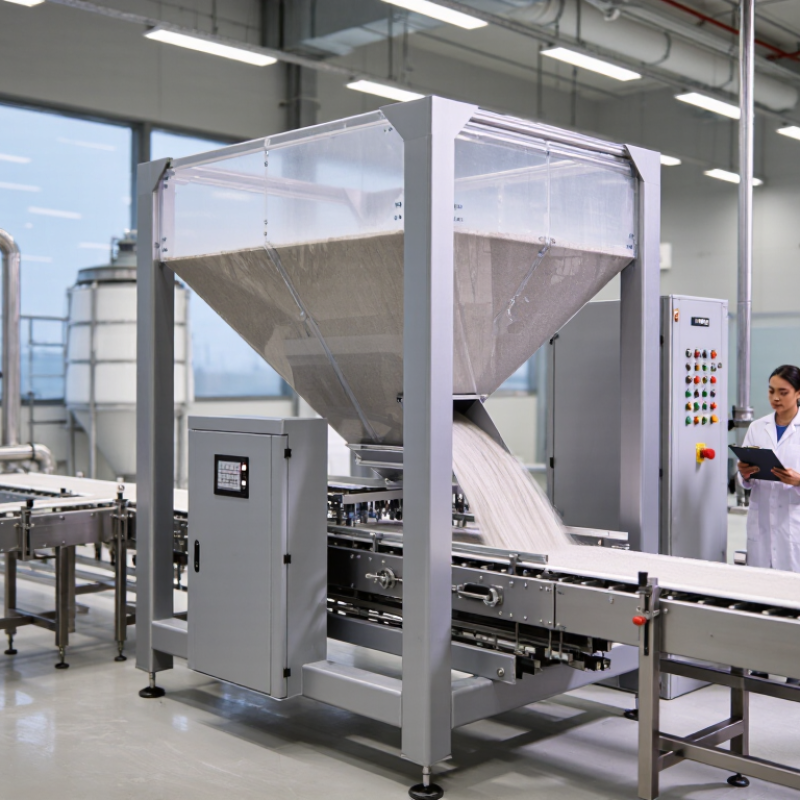
Choosing a powder feeder starts with defining the process, not comparing machines. Record the target rate, bulk density, particle size, moisture, and flowability. Include the lowest and highest expected rates. A feeder that performs well at 100 kilograms per hour may become unstable at 5 kilograms per hour.
Measure accuracy under real conditions. Ask whether the process needs ±1%, ±0.5%, or tighter control. Powder temperature and humidity can change the result. The 2023 Global Powder Handling Equipment Market report by Grand View Research estimated continued market growth, driven partly by stricter dosing requirements. That trend matters, but market growth does not replace application testing. I have seen specifications look perfect until sticky powder formed a bridge above the screw.
Consider refill frequency, cleaning time, available headroom, and integration with weighing controls. The feeder should match the batch size and production rhythm. For example, a small laboratory line may need gentle, low-rate feeding, while a continuous process may require stable output for several hours. Request test data using your actual powder, not a similar-looking substitute. Test both full and nearly empty hopper conditions.
Tips: Write a one-page requirement sheet before requesting quotations. Include three operating rates, acceptable accuracy, powder behavior, cleaning limits, and contact-material requirements. Leave room for uncertainty. Powder properties often vary between lots, so allow a practical adjustment range instead of designing around one perfect number.
| Powder Feeding Requirement | Typical Powder Condition | Common Target Range | Suitable Feeder Type | Recommended Configuration | Important Selection Criteria | Practical Check |
|---|---|---|---|---|---|---|
| Very low feed rate | Fine, cohesive or high-value powder requiring controlled dosing | Approximately 0.01–5 kg/h | Micro-screw or precision loss-in-weight feeder | Small screw, high-resolution load cells, steep hopper walls and agitation | Resolution, minimum stable feed rate, powder retention and cleanability | Run a 30–60 minute stability test at the lowest required rate |
| Low to medium feed rate | Free-flowing or moderately cohesive powder used in continuous processing | Approximately 0.5–100 kg/h | Single-screw gravimetric feeder | Variable-speed screw with refill control and mass-flow feedback | Turndown ratio, refill interruption, bulk-density variation and accuracy | Verify performance at minimum, normal and maximum operating rates |
| Medium to high feed rate | Powders with changing bulk density or products needing continuous dosing | Approximately 20–1,000 kg/h | Twin-screw loss-in-weight feeder | Intermeshing screws, controlled hopper agitation and automatic refill | Bridging resistance, screw torque, refill recovery and mass-flow accuracy | Measure feed stability before and after each hopper refill |
| Very high feed rate | Granular or free-flowing powder with relatively stable bulk density | Approximately 500–10,000 kg/h | Rotary valve, belt feeder or large screw feeder | Heavy-duty drive, wear-resistant contact parts and level monitoring | Throughput capacity, abrasion, pressure differential and maintenance access | Confirm maximum capacity with the actual powder, not only with test material |
| Cohesive or bridge-forming powder | Fine powder, electrostatic material or powder with poor flowability | Rate depends strongly on cohesion and aeration | Agitated screw feeder or twin-screw feeder | Mass-flow hopper, flexible-wall activator, low-shear agitator and controlled venting | Bridging, rat-holing, compaction, shear sensitivity and dust control | Conduct a flowability test using the actual moisture and particle-size range |
| Abrasion-sensitive application | Mineral, ceramic, metallic or other powder containing hard particles | Selected according to process throughput | Slow-speed screw, rotary valve or belt feeder | Replaceable wear liners, hardened contact surfaces and guarded transfer points | Wear rate, particle breakage, seal life and inspection frequency | Compare expected service life using the powder’s hardness and abrasiveness data |
| Dust-sensitive or hazardous powder | Fine combustible, toxic, reactive or highly dusty material | Rate depends on containment and process design | Enclosed gravimetric screw feeder or sealed rotary valve | Sealed hopper, dust extraction, grounding and suitable explosion-protection measures | Containment, leakage prevention, ignition-source control and cleaning method | Complete a formal hazard assessment before equipment selection |
| Hygienic or frequent-changeover process | Food, pharmaceutical or sensitive chemical powder | Often approximately 0.1–500 kg/h | Quick-release single- or twin-screw feeder | Tool-less dismantling where possible, smooth surfaces and minimal dead zones | Cleanability, material compatibility, seal design and validation requirements | Check that all powder-contact parts can be inspected and cleaned completely |
| Batch dosing | Powder added in measured quantities rather than continuously | From several grams to several hundred kilograms per batch | Gravimetric batch feeder or weigh hopper with discharge device | Load cells, controlled discharge, anti-bridging device and batch recipe control | Batch accuracy, cutoff response, residual material and repeatability | Test the effect of feeder speed and shutoff delay on final batch weight |
| Volumetric dosing | Free-flowing powder with stable bulk density and low accuracy demands | Suitable when density variation is limited | Volumetric screw or rotary feeder | Constant-speed or calibrated variable-speed drive with level control | Bulk-density consistency, calibration interval and process tolerance | Use gravimetric control if density changes could affect product quality |