Electronic Contract Manufacturing Service Provider in California

Best Dual Channel Syringe Pump Manufacturers in China

Choosing a reliable Dual Channel Syringe Pump starts with a practical question: can both channels deliver steady, repeatable flow under your actual operating conditions? In a laboratory, that may mean two syringes running at different rates, a clear display showing each setting, and controls that remain easy to adjust during a long experiment. Small details matter. A quiet motor is useful, but accurate delivery, compatible syringe sizes, and responsive technical support matter more.

“Reliable dual-channel pumping depends on verified flow performance, clear controls, and support that continues after installation.” This proposed quotation should be attributed only after a named syringe-pump expert has confirmed it. That distinction matters: technical buying guides should not present invented remarks as real expert testimony. It also reflects a practical lesson for comparing manufacturers. Ask how flow accuracy is tested, what calibration information is provided, and whether performance data applies to your selected syringe and flow range.

China has manufacturers serving research, medical, and industrial applications, but specifications alone do not tell the whole story. Look closely at product documentation, quality-control practices, customization options, and service arrangements. Request the exact model’s datasheet. Check its supported syringe types. Confirm what the warranty covers. A polished brochure is not enough.

This guide will compare leading Chinese suppliers through those concrete criteria. It will help buyers identify strengths, trade-offs, and questions worth asking before purchase. Not every manufacturer fits every application. That deserves a closer look.
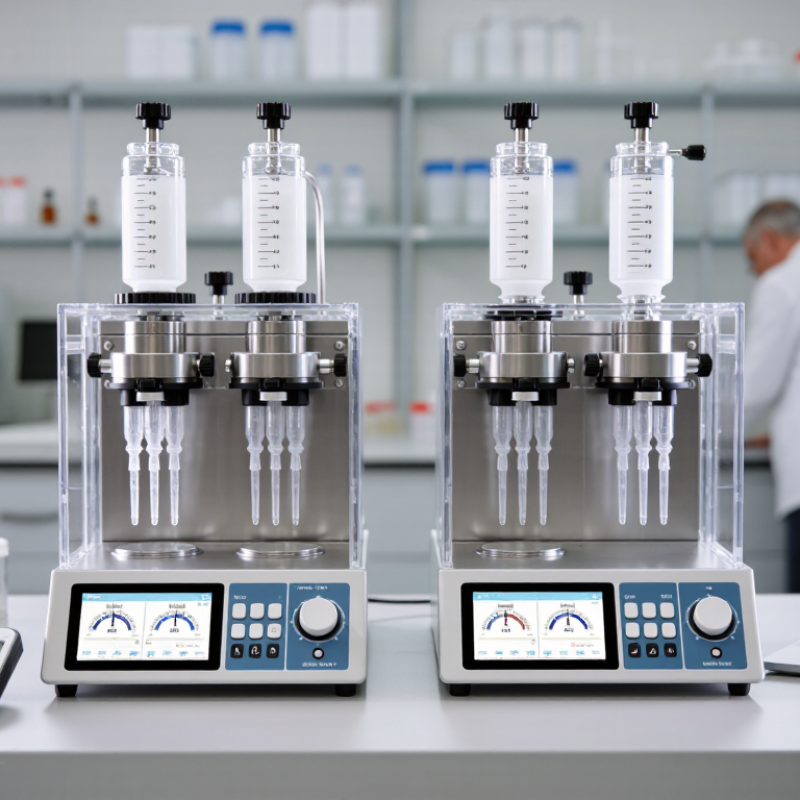
Best Dual Channel Syringe Pump Manufacturers in China

What Is a Dual-Channel Syringe Pump?

A dual-channel syringe pump uses two drive mechanisms to deliver fluid from two syringes. Depending on its design, each channel may run independently or follow a coordinated program. This lets an operator deliver two fluids at once, or compare separate flow conditions within one experiment.

Each drive pushes a syringe plunger at a set rate. The selected syringe size matters: an incorrect setting can change the actual flow. So can loose connections, trapped air, or a plunger that does not move smoothly. Watch the outlet tubing during setup. A small bubble is easy to miss. It can still affect delivery.

The term “dual-channel” can sound more uniform than it is. Some pumps offer separate flow settings, while others share controls or operating limits. Check the manual for supported syringe sizes, flow ranges, and synchronization options before planning a procedure. In laboratory use, record the fluid, syringe, rate, and any calibration checks. That record helps explain unexpected results later. Even a careful setup is not perfect; tubing compliance and fluid viscosity can shift performance from the displayed value.

How Dual-Channel Syringe Pumps Work

A dual-channel syringe pump holds two syringes and drives their plungers with separate motor mechanisms. In many designs, a motor turns a lead screw, converting rotation into steady forward movement. The controller sets each channel’s plunger speed, while the selected syringe diameter helps determine the flow rate. Both channels may run independently, though available modes vary by model.

Tips: Match the syringe size entered in the settings to the syringe actually installed. Check that each plunger sits firmly in its holder. A loose fit can cause uneven movement. Prime the tubing before measuring delivery, and inspect connections for trapped air or leaks. Small details matter.

During operation, watch both syringe barrels and the outlet lines. One channel may deliver a different fluid or rate from the other, so label lines clearly and verify each setup. Tubing flexibility, syringe dimensions, and fluid resistance can affect delivery; a displayed rate does not guarantee identical flow at the outlet. That part is easy to overlook. For critical work, compare pump output with a suitable measurement method and follow the equipment’s instructions. Dual-channel operation is convenient, but it still needs careful setup and periodic checks.

Criteria for Evaluating Chinese Manufacturers

When evaluating Chinese dual-channel syringe pump manufacturers, ask for measured performance, not brochure claims. Grand View Research’s 2024 syringe pump market report projects a 7.6% compound annual growth rate from 2024 to 2030. That forecast signals expanding demand, but it does not verify any supplier’s quality.

Request test records for both channels at low and high flow rates, using different syringe sizes and realistic back pressure. Check flow accuracy, repeatability, alarm response, and whether one channel affects the other. Small errors matter.

Inspect the evidence behind each specification. Look for traceable calibration records, serial-numbered production tests, clear firmware revision control, and documented component changes. Ask to run a sample unit for several hours; watch for unstable flow, noisy drive mechanisms, or confusing controls.

Request a written warranty and details on spare parts, repair turnaround, and technical support. If the pump is intended for clinical use, verify applicable certifications for that intended use rather than relying on a generic certificate.

A factory audit can help, though it cannot replace independent testing. I would still compare the supplier’s raw test data with results from your own application. A polished report is not enough.

Leading Dual-Channel Syringe Pump Manufacturers in China

Leading dual-channel syringe pump manufacturers in China compete on more than channel count. Buyers should check flow-rate accuracy, independent channel control, occlusion alarms, and compatibility with syringe sizes used in their workflows. Ask for test data at both low and high flow rates. A smooth screen is not proof of stable delivery.

China’s National Bureau of Statistics reported that national R&D expenditure reached RMB 3.33 trillion in 2023, equal to 2.64% of GDP. This broad indicator does not measure syringe-pump quality, but it provides useful context for the country’s innovation environment. During supplier reviews, request calibration records, repeatability results, and service-response times. Check how the pump behaves when one channel stops or a syringe is changed. Small operational details matter.

Look beyond brochures. A well-built unit should offer clear alarms, readable settings, and straightforward cleaning around the syringe clamps. Ask for a demonstration using your actual syringe sizes and tubing. One limitation is easy to overlook: test results from a single flow setting may not represent daily use. Independent verification takes time, but it can reveal practical gaps before procurement.

Best Dual Channel Syringe Pump Manufacturers in China - Leading Dual-Channel Syringe Pump Manufacturers in China

Supplier evaluation table — technical specifications should be confirmed for the exact model and syringe configuration.

Evaluation dimension Relevant data or requirement What to verify with the manufacturer
Channel configuration Two syringe channels Whether each channel can be started, stopped, and configured independently.
Flow-rate range Model- and syringe-dependent; no single range applies to every pump. Request the specified range for each supported syringe size, channel, and operating mode.
Flow accuracy and repeatability Performance depends on the syringe, fluid, flow rate, and test conditions. Ask for test results, stated tolerances, and the test method used for the quoted figures.
Syringe compatibility Compatibility varies by pump model, syringe dimensions, and holder design. Confirm supported syringe sizes and whether the supplier provides a compatibility list or adapter options.
Operating modes Common options may include infusion and withdrawal; available modes are model-specific. Check which modes are supported on both channels and whether settings can differ by channel.
Drive and syringe positioning Motorized drive systems move the syringe plunger; mechanical design differs across models. Review the drive mechanism, syringe retention, setup procedure, and suitability for the intended workload.
Alarms and status indicators Alarm functions vary; potential conditions include occlusion, end of travel, or setup errors. Request the alarm list, channel-specific behavior, and details on how alerts are displayed or sounded.
Controls and connectivity User controls and communication interfaces are model-dependent. Confirm display and control options, available interfaces, communication protocol, and software requirements.
Quality and compliance documents Documentation depends on the product category and intended market. Request applicable certificates, declarations, user manuals, and product-specific test records; verify their scope and validity.
Calibration and final testing A documented inspection and performance-testing process supports consistent production quality. Ask which checks are performed on each unit and whether a serial-number-linked test report is available.
Customization and OEM support Options may include labeling, language, packaging, or configuration changes; availability varies. Confirm minimum order quantities, engineering scope, sample approval, and change-control procedures.
Service and spare parts Support terms and parts availability are supplier- and destination-dependent. Clarify warranty coverage, repair process, technical support hours, and spare-parts lead times.
Manufacturing traceability Traceability practices differ between production facilities. Check whether units and critical components are identifiable through serial or lot records.

Applications and Market Trends in China

Best Dual Channel Syringe Pump Manufacturers in China

Across China, dual-channel syringe pumps support research that depends on controlled, repeatable fluid delivery. In microfluidics labs, two streams can meet at a chip inlet to form a concentration gradient. In analytical chemistry, separate channels may deliver reagents and samples at set rates. Cell culture experiments also use precise feeding, though sterile tubing and compatible materials matter as much as the pump itself. Small details matter.

A useful evaluation starts with the actual workflow. Check flow accuracy at the syringe size and rate you plan to use, not only the headline specification. Observe startup delay, pulsation, and performance against back pressure. For paired delivery, confirm whether each channel can be adjusted and monitored independently. These checks can reveal practical limits that a product sheet may not show.

Market demand in China is increasingly shaped by laboratory automation, compact instruments, and locally supported equipment. Buyers often look for easy integration with controllers, clear operating software, and accessible maintenance. Yet a lower purchase price does not guarantee lower operating cost. Spare parts, calibration records, and response time deserve attention. Specifications can look convincing; daily operation is less tidy. Comparing samples under realistic conditions is still worthwhile.

China Syringe Pump Market Trends: An Aging Population

China’s growing older-adult population is a healthcare demand indicator relevant to infusion-device applications, including critical care, oncology, and long-term treatment.

The chart shows the share of China’s population aged 65 and over, not syringe pump sales or market size. Source: National Bureau of Statistics of China, annual national economic and social development statistics.