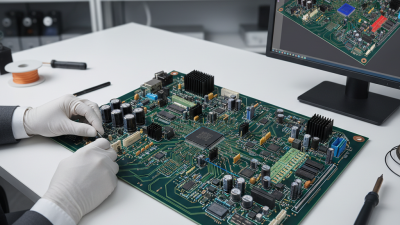
Choosing the best China pcb circuit board manufacturer requires more than comparing prices or polished websites. A reliable supplier must prove its capabilities through consistent production, documented quality systems, and responsive communication. This guide examines manufacturers through practical indicators, including engineering support, material control, inspection procedures, and delivery performance.
Experienced buyers often begin with factory audits, sample reviews, and technical discussions. They check whether the manufacturer understands layer stackups, controlled impedance, thermal requirements, and surface finishes. They also review equipment such as automated optical inspection machines, flying probes, and X-ray systems. These details matter when a board must fit precisely inside a compact enclosure.
Quality certifications can support credibility, but certificates alone do not guarantee dependable results. Ask for traceability records, process controls, and evidence from comparable projects. A capable manufacturer should explain its testing methods without hiding behind vague promises. It should also communicate clearly when a design needs revision.
No ranking is perfect.
The best choice depends on your product, volume, tolerance requirements, and target market. A supplier that excels at rapid prototypes may not suit high-volume automotive production. Another may offer excellent pricing but lack strong engineering support. This article compares leading China PCB manufacturers from a balanced perspective, combining technical expertise, production experience, and customer-focused reliability. Some conclusions may change as factories upgrade their equipment or improve their processes, so careful verification remains essential.

China’s PCB industry produces more than 50% of the world’s printed circuit boards, according to widely cited industry estimates. This scale comes from dense supplier networks, skilled engineering teams, and efficient material sourcing. Manufacturers serve consumer electronics, industrial controls, automotive systems, telecommunications, and medical equipment. Their factories commonly support rigid, flexible, rigid-flex, and high-density interconnect boards.
The best China PCB circuit board manufacturers are not always the largest factories. Strong candidates show stable layer registration, controlled impedance testing, clean production rooms, and traceable inspection records. During supplier visits, buyers should examine copper thickness, drilling accuracy, solder-mask consistency, and shipment protection. A reliable manufacturer also explains its process limits clearly. That honesty matters. Some suppliers promise every capability, but their samples may reveal uneven plating or weak documentation.
China’s output advantage is substantial, yet capacity alone does not guarantee quality. Experienced buyers compare engineering feedback, prototype speed, defect data, and corrective-action reports. Certifications can support trust, but they should be verified rather than accepted blindly. Communication also affects results, especially when drawings change late. In practice, a smaller plant with disciplined quality control may outperform a larger one. This is easy to overlook. Buyers should review several production batches before approving long-term cooperation. Geological distance, language gaps, and supply interruptions can still create risks. Careful audits remain necessary.
| Evaluation Dimension | Industry Data or Technical Fact | What to Check in a Leading Manufacturer |
|---|---|---|
| Global Production Position | China produces more than 50% of global printed circuit board output, making it the largest PCB manufacturing base worldwide. | Assess whether the supplier has stable access to domestic materials, complete process control, and reliable export logistics. |
| Product Portfolio | China-based PCB production commonly covers single-sided, double-sided, multilayer, HDI, flexible, rigid-flex, metal-core, and high-frequency boards. | Choose a manufacturer whose production portfolio matches the required board structure and application. |
| Layer Capability | Standard multilayer boards are widely produced, while high-layer-count designs require advanced lamination, registration, and reliability controls. | Review qualified layer-count limits, layer-to-layer registration data, and production examples with similar stack-ups. |
| Line Width and Spacing | Approximately 75/75 μm line width and spacing are common reference values for advanced conventional production; HDI designs may require finer geometries. | Confirm minimum trace and spacing capability using the exact copper thickness, material, and etching process required. |
| Via Technology | Through-hole, blind, buried, and laser microvias are established PCB interconnection methods; microvias are widely used in HDI boards. | Check microvia stacking, via filling, via reliability testing, and capability for sequential lamination. |
| Copper Thickness | 18 μm, 35 μm, and 70 μm copper foils are common reference options for PCB fabrication, with heavier copper available for high-current designs. | Verify finished copper thickness, current-carrying requirements, plating uniformity, and thermal performance. |
| Impedance Control | Controlled impedance is essential for high-speed interfaces, including differential-pair and single-ended transmission lines. | Request impedance coupons, stack-up calculations, test reports, and defined tolerance limits. |
| Materials | Common materials include standard FR-4, high-Tg laminates, halogen-free materials, flexible polyimide, and high-frequency laminates. | Check Tg, Z-axis expansion, dielectric constant, dissipation factor, thermal performance, and material traceability. |
| Quality Control | Common inspection methods include automated optical inspection, electrical testing, flying-probe testing, X-ray inspection, cross-section analysis, and dimensional inspection. | Evaluate inspection coverage, defect classification, corrective-action procedures, and process capability records. |
| Quality Management | ISO 9001 is widely used for general quality management. Automotive, medical, and aerospace projects may require IATF 16949, ISO 13485, or AS9100 respectively. | Confirm that the certification scope covers the actual production site and the intended end-use industry. |
| Environmental Compliance | RoHS and REACH compliance are common requirements for electronics supplied to international markets. Halogen-free construction may also be specified. | Request material declarations, restricted-substance test reports, and batch-level documentation where required. |
| Reliability Testing | Typical reliability evaluations include thermal cycling, solderability, insulation resistance, moisture resistance, peel strength, and conductive-anodic-filament testing. | Match the test plan to the product life cycle, operating environment, safety requirements, and applicable acceptance standards. |
| Best-Fit Application | Major PCB application sectors include consumer electronics, telecommunications, automotive electronics, industrial control, medical equipment, computing, and aerospace systems. | Select manufacturing experience based on application risk, required certification, electrical complexity, volume, and product life cycle. |