Electronic Contract Manufacturing Service Provider in California

What Is an Automatic Diverter and How Does It Work?

An Automatic Diverter is a control device that redirects products, fluids, or materials toward different paths without constant manual handling. It may appear in a conveyor system, packaging line, piping network, or automated warehouse. The basic idea is simple. Detect, decide, redirect.

Sensors identify an item, flow condition, pressure change, or process command. A programmable logic controller then checks the signal and activates an actuator. The actuator moves a gate, flap, valve, or switching mechanism. The material follows its assigned route. In a conveyor application, you might see a parcel leave the main belt and enter a side lane within seconds. In a piping system, the same principle may send liquid into a selected tank.

Automation consultant David W. Spitzer expresses the engineering principle clearly: “A diverter is only as reliable as the signal, actuator, and verification behind it.” That warning matters. A fast mechanism is not enough. The system also needs accurate sensors, suitable timing, safe stopping logic, and regular inspection.

In real facilities, small details often decide performance. Dust can weaken a sensor signal. A loose belt can change product timing. A worn actuator may move slowly. These issues are easy to underestimate.

This article explains what an Automatic Diverter does, how its operating sequence works, and where different designs fit best. It also considers practical limits. No system is perfect. Careful setup, testing, and maintenance remain essential.
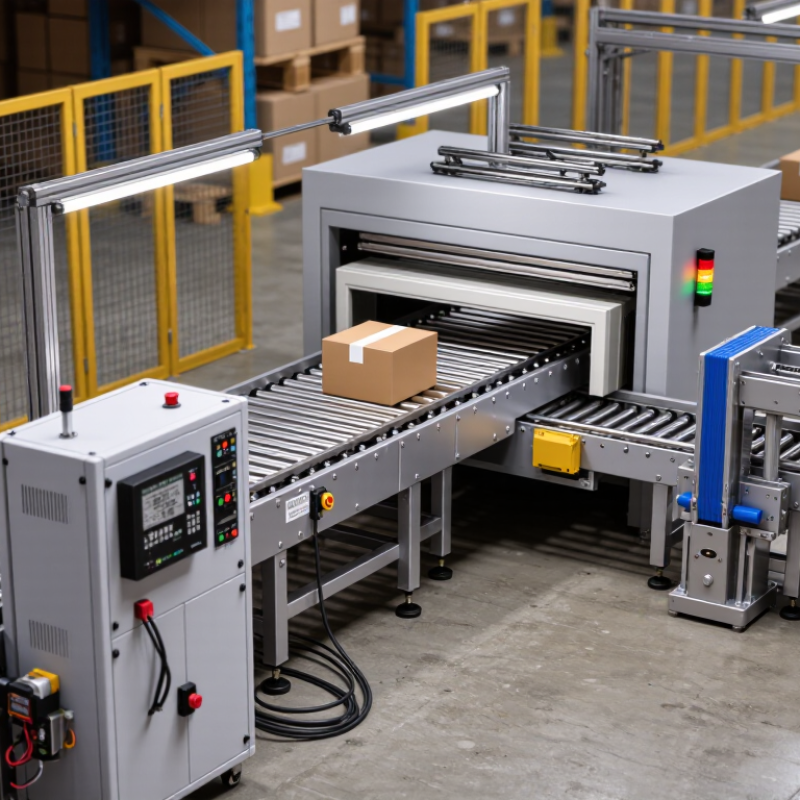
What Is an Automatic Diverter and How Does It Work?

Definition and Purpose of an Automatic Diverter

An automatic diverter is a conveyor device that redirects packages without manual handling. Its purpose is simple: move each item toward the correct lane, chute, workstation, or storage area. A sensor detects the package, while a controller checks its destination. Then, a belt, roller arm, pop-up wheel, or sliding mechanism changes its path. The result may look effortless. It is not.

In practical operations, timing matters more than appearance. A diverter must match package speed, spacing, weight, and shape. A small carton may need a gentle side belt, while a heavy tote may require powered rollers. Barcode scanners or warehouse software usually provide routing information. According to the International Federation of Robotics’ World Robotics 2024 report, 541,302 industrial robots were installed globally in 2023. This wider automation growth increases the need for reliable material-flow equipment, including automatic diverters.

A well-designed diverter reduces repetitive labor and supports consistent throughput. It can also limit unnecessary walking between conveyor zones. However, automation does not remove every problem. Dust, damaged labels, uneven cartons, and poor sensor alignment can still cause a wrong turn. In my experience, the most overlooked detail is spacing. Even a fast actuator cannot correct two packages arriving too closely together. MHI’s 2024 Annual Industry Report identifies robotics and automation as major supply-chain investment priorities, but performance still depends on maintenance, testing, and sensible routing logic. The hardware is only part of the answer.

Key Components and Their Functions

What Is an Automatic Diverter and How Does It Work?

An automatic diverter redirects cartons, totes, or parcels without stopping the conveyor. Its key components must work as one system. A photoelectric sensor detects an approaching item and confirms its position. An encoder tracks belt movement and measures the item’s exact location. The controller then compares that signal with routing instructions from the warehouse management system.

The actuator creates the physical movement. Common options include pneumatic arms, pop-up wheels, sliding shoes, and pivoting gates. Each design suits different loads, speeds, and spacing conditions. A frame supports the mechanism, while guides keep packages stable during transfer. Sensors also check whether an item left the main lane. That feedback prevents repeated commands and reduces congestion.

Deloitte’s 2023 Smart Manufacturing and Operations Survey found that 86% of manufacturers expect smart manufacturing to become a major competitiveness factor within five years. This pressure makes reliable controls increasingly important. MHI’s 2024 Annual Industry Report also identifies automation, robotics, and data visibility as major supply-chain investment priorities. Still, automation is not automatically precise. Poor sensor alignment, reflective packaging, or inconsistent carton spacing can cause missed diversions. Field maintenance records often reveal a simple truth: calibration matters as much as hardware. A practical design should include accessible sensors, manual inspection points, and fault alerts. Small details matter.

What Is an Automatic Diverter and How Does It Work?

An automatic diverter redirects products, materials, or fluid flows to a selected route without manual intervention. The chart shows representative response times for the main stages of a typical sensor-controlled diverter cycle.

Sensors detect the incoming item, the controller evaluates the routing instruction, the actuator moves the diverter, and the position feedback confirms that the selected path is ready. Actual timing varies with conveyor speed, load, actuator type, and system configuration.

How an Automatic Diverter Operates Step by Step

What Is an Automatic Diverter and How Does It Work?

An automatic diverter directs water, air, or another flow toward a selected outlet. Its operation begins with a sensor, timer, or control signal. The system checks current conditions, such as pressure, temperature, level, or flow direction. A controller then compares that information with the required setting. Small differences matter.

The controller sends power to an actuator. The actuator moves the diverter valve through gears, a piston, or an electric motor. Inside the valve, a sealed passage opens one route and closes another. Flow then changes without continuous manual adjustment. In a water system, you may hear a brief click before the stream reaches a different pipe. A position sensor confirms the valve’s movement. If the position is incorrect, the controller can stop the cycle or issue an alert.

In practical installations, technicians check alignment, seals, wiring, and pressure limits before operation. A clogged passage may slow the response. A weak signal may leave the valve partly open. That condition is easy to miss. Regular testing helps reveal these problems before they affect connected equipment. The exact sequence varies by application, so installation instructions and measured operating data should guide adjustments. Even reliable systems need inspection. Assumptions can fail.

Common Types and Application Environments

An automatic diverter is a mechanical device that redirects products without manual handling. A sensor detects an item’s position, size, or destination. Then, a controller activates a flap, belt, roller, or air mechanism. The product moves toward the selected lane. Timing matters greatly, especially when packages arrive every few seconds.

Common types include belt diverters, pop-up roller diverters, sliding shoe diverters, and swinging-arm models. Belt diverters gently move cartons sideways and suit lightweight packaging. Pop-up rollers lift products briefly, making them useful for boxes with firm bases. Sliding shoe systems handle high volumes and offer accurate sorting. Air-powered diverters work well with small, light items, but they need controlled pressure and regular filter checks. Each type has limits.

Warehouses often use diverters for order sorting, return handling, and shipping lanes. Food processing areas may require smooth surfaces and frequent cleaning. Parcel centers need fast switching and reliable barcode communication. Manufacturing lines use diverters to separate approved and rejected parts. Recycling facilities may redirect materials by size or composition, though dust can reduce sensor accuracy. Outdoor systems face rain, temperature changes, and corrosion.

No diverter is perfect. A poorly aligned sensor can send good products into the wrong lane. Operators should inspect belts, hinges, guards, and emergency stops. Software settings also need testing after layout changes. In my experience, simple designs are easier to maintain, but they may sacrifice speed or flexibility. This trade-off deserves careful review before installation.

Benefits, Limitations, and Maintenance Considerations

An automatic diverter redirects water, air, or bulk material between two or more pathways. A sensor, timer, or control signal activates the mechanism. In a sorting line, it may move a gate within seconds. In a fluid system, it can switch flow toward a storage tank or treatment stage. This reduces manual handling and supports steady operation.

Its main benefit is consistency. The diverter can respond faster than an operator, especially during repeated production cycles. It may reduce spills, idle time, and unnecessary labor. Correct sizing also improves flow control and protects downstream equipment. However, automation does not remove every risk. Sensors can give false readings when dust, foam, vibration, or temperature changes interfere. A blocked gate may stop the entire process. Pressure surges can also damage seals or actuators.

Maintenance should match the material and operating environment. Inspect hinges, seals, wiring, and mounting bolts at planned intervals. Remove buildup before it hardens around moving parts. Check sensor accuracy with a known reference, not only the control panel. Listen for scraping or delayed movement. Small changes matter. Lubrication may help mechanical joints, but excess lubricant can attract dust. Replacement intervals should follow measured wear, although real conditions often differ from initial schedules. Operators should record faults, cleaning times, and unusual noise. These records reveal patterns that a single inspection may miss. A practical review should question whether the selected diverter still suits the actual flow rate, temperature, and duty cycle.

What Is an Automatic Diverter and How Does It Work? - Benefits, Limitations, and Maintenance Considerations

Data Dimension Typical Data or Description How It Works Practical Consideration
Basic definition An automatic diverter is a powered mechanism that redirects products, packages, materials, or process flow from a primary route to one or more alternative routes. A controller receives a routing command, activates an actuator, and moves a gate, arm, belt, roller, flap, or valve into the required position. The exact design depends on whether the system handles solid products, bulk material, air, liquid, or gas.
Primary purpose To automatically sort, separate, reject, bypass, merge, or redirect material without continuous manual intervention. Sensors or an upstream control system identify the item or process condition and send a destination signal to the diverter. Correct routing logic is essential; an incorrect signal can send material to the wrong destination.
Common actuation methods Electric motor, pneumatic cylinder, hydraulic cylinder, solenoid, or electromechanical linear actuator. The actuator converts an electrical or fluid-power command into mechanical movement. Pneumatic systems require clean, dry air; electric systems require suitable power, control, and protection.
Typical sensing devices Photoelectric sensors, proximity sensors, barcode readers, vision systems, encoders, pressure sensors, flow meters, or level switches. The sensor detects position, identity, quantity, pressure, flow, or level and transmits information to a PLC or dedicated controller. Sensor alignment, cleanliness, and correct calibration directly affect routing accuracy.
Typical control sequence Detect or identify → calculate destination → confirm timing → actuate → verify position → return or hold. The controller coordinates the diverter with conveyor speed, spacing, flow conditions, and downstream availability. A position feedback signal is preferable where a failed or incomplete movement could cause blockage or unsafe conditions.
Common mechanical forms Pivoting arm, pop-up wheel, swing gate, sliding gate, belt steer, roller transfer, chute flap, rotary valve, or pipeline diverter valve. Each form changes the direction or path of the material using a controlled movement suited to the application. The mechanism must match product shape, mass, fragility, temperature, abrasiveness, and required throughput.
Response and cycle behavior Response time and cycle rate vary widely by actuator, travel distance, load, control logic, and product spacing; no single universal speed applies. The controller must move the diverter fully into position before the target item or process flow reaches the decision point. Manufacturers’ cycle ratings should be checked against actual load, duty cycle, acceleration, and stopping requirements.
Main benefits Reduced manual handling, repeatable routing, faster sorting, improved process integration, better traceability, and more flexible line configuration. Automation links detection, decision-making, actuation, and feedback into a repeatable sequence. Benefits are greatest when product presentation, sensor data, and downstream capacity are consistent.
Key limitations Initial cost, control-system complexity, sensor dependency, wear of moving parts, noise, energy use, and possible downtime during faults. The diverter relies on coordinated mechanical, electrical, software, and sometimes pneumatic or hydraulic components. Poorly defined product tolerances or unstable flow conditions can reduce accuracy and increase jams.
Installation requirements Adequate structural support, access for maintenance, correct alignment, compatible utilities, guarding, sensors, controls, and safe discharge areas. The diverter is installed at a calculated decision point and integrated with upstream and downstream equipment. Allow clearance for actuator travel, cleaning, inspection, emergency access, and removal of worn components.
Routine maintenance Inspect fasteners, hinges, bearings, belts, rollers, seals, guides, wiring, tubing, sensors, guards, and actuator mounting points. Regular inspection identifies wear, looseness, contamination, leakage, misalignment, and abnormal noise before failure occurs. Use the equipment manufacturer’s lubrication type, inspection intervals, and replacement criteria.
Cleaning and contamination control Remove accumulated dust, product residue, debris, moisture, and foreign objects from moving and sensing areas. Clean surfaces allow free movement and help sensors detect products or positions reliably. Cleaning methods must be compatible with electrical enclosures, seals, lubricants, and the material being handled.
Frequent fault causes Blocked travel, product jams, incorrect timing, sensor contamination, loose connections, air leaks, worn bearings, or failed position feedback. A fault may prevent movement, cause an incomplete stroke, or produce an incorrect route decision. Troubleshooting should begin with isolation and safety checks, followed by mechanical, utility, sensor, and control-system checks.
Safety considerations Physical guarding, emergency stops, interlocks, lockout/tagout procedures, pinch-point controls, and safe access are commonly required. Safety systems stop or inhibit hazardous motion when a guard is opened, an emergency stop is activated, or a dangerous condition is detected. The installation should be assessed against applicable local machinery, electrical, and workplace safety requirements.
Selection criteria Material characteristics, load, dimensions, throughput, route count, accuracy, available utilities, environmental conditions, cleanability, and control integration. The selected diverter must provide sufficient force, travel, response, durability, and control compatibility for the complete operating cycle. Testing with representative products and operating conditions is recommended before final installation.

Note: Performance values and maintenance intervals are application-dependent. Always verify final requirements against the equipment specification, site conditions, and applicable safety regulations.