What Is the 2026 Top LED Tri-Proof Light Type?
What will define the top LED Tri-Proof Light type in 2026? The answer may not be the brightest fixture. It will likely be the most balanced system, combining efficiency, durability, visual comfort, and practical control.
Dr. Jianzhong Jiao, a recognized LED technology specialist, has said, “LEDs are not just a light source; they are a system.” This principle fits modern LED Tri-Proof Light development. A strong 2026 model should offer stable lumen output, low flicker, efficient thermal management, and reliable performance in demanding spaces. Warehouses, parking areas, food-processing rooms, tunnels, and workshops all expose fixtures to different risks. Dust gathers on housings. Moisture enters weak seals. Heat shortens poor-quality drivers.
The leading type may be an IP65 or IP66 linear fixture with a high-efficiency LED module, replaceable driver, and sensor-ready controls. Polycarbonate housing can reduce breakage risks. A frosted diffuser can soften harsh brightness. DALI, 0–10V, or microwave sensing may also reduce wasted energy.
But one point deserves caution. “Top” does not mean identical everywhere. A cold warehouse needs different testing from a humid production room. Product claims should include measured efficacy, operating temperature, color consistency, surge protection, and service data. Marketing numbers alone are not enough.
The best choice needs evidence.
This article examines the most promising LED Tri-Proof Light type for 2026, while questioning where current designs still fall short. Even efficient fixtures can disappoint when installation, controls, or maintenance are overlooked.
Definition and Core Features of the 2026 LED Tri-Proof Light
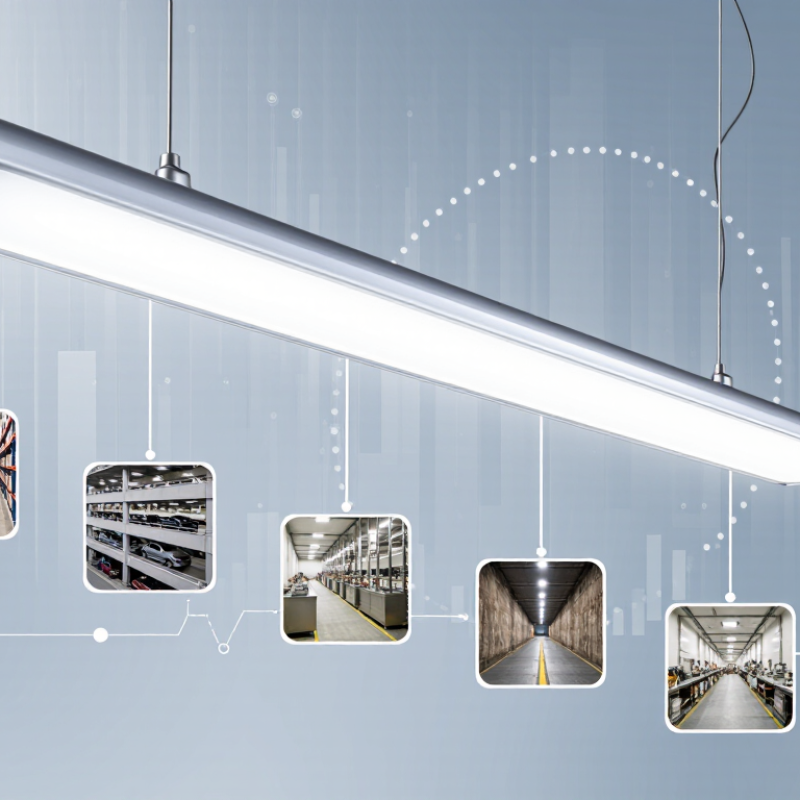
In 2026, the leading LED tri-proof light type is the integrated linear vapor-tight fixture. It combines an LED board, driver, diffuser, and sealed housing. “Tri-proof” usually means protection against dust, moisture, and corrosion. Common specifications include IP65 or IP66 protection, with IK ratings for impact resistance. The fixture suits warehouses, parking areas, food-processing rooms, tunnels, and covered walkways.
The core design is simple. A polycarbonate housing reduces cracking risks, while stainless or coated hardware helps resist humid air. Efficient models commonly deliver about 120–170 lumens per watt, depending on optics, temperature, and controls. The U.S. Department of Energy’s Solid-State Lighting reports continue to identify higher efficacy, better thermal management, and connected controls as key development priorities.
That matters in real installations. A 1.2-meter fixture should provide even light across shelving, not a bright strip beneath the ceiling.
Reliable selection also requires more than an IP number. Check LM-80 and TM-21 evidence, driver temperature limits, lumen maintenance, and tested operating hours. The DesignLights Consortium’s technical requirements also emphasize performance verification and controllability for qualifying commercial products. Some 2026 fixtures add occupancy sensors, dimming, and emergency options. Useful, but not automatically better.
I still see projects choosing high wattage for poor layout. That mistake remains expensive. A stronger specification matches beam angle, mounting height, ambient temperature, and cleaning conditions. Even the best sealed fixture can fail early when heat has nowhere to escape.
Main Types and Structural Designs of LED Tri-Proof Lights
What Is the 2026 Top LED Tri-Proof Light Type?
The leading LED tri-proof light type in 2026 is not chosen by brightness alone. It is a sealed linear fixture designed for moisture, dust, vibration, and frequent cleaning. Common types include integrated LED, replaceable-module, surface-mounted, suspended, and recessed models. Integrated fixtures usually offer a slimmer body and fewer internal connections. Replaceable-module designs may reduce maintenance costs, but their parts must remain available. That flexibility matters.
Structural design strongly affects service life. Most tri-proof lights use a polycarbonate or fiberglass-reinforced housing, a diffusing cover, end caps, clips, and a continuous gasket. Inside, an aluminum circuit board or heat sink moves heat away from the LEDs. Some models include through-wiring terminals for longer warehouse rows. Others use reinforced clips for areas exposed to vibration. One-piece housings can improve sealing. Two-piece housings may simplify installation and repair.
In a cold storage room, a sealed surface-mounted fixture often performs better than a recessed model with exposed gaps. In a car wash, chemical resistance and gasket quality deserve close inspection. For food-processing spaces, a smooth, easy-clean cover reduces trapped residue. IP65 or IP66 ratings are useful references, but installation still decides real protection. A poorly tightened end cap can defeat a strong enclosure. Brighter is not always better. Glare, uneven spacing, and weak heat management can create problems that product sheets rarely show. Personally, I would inspect the clips and cable entry before trusting the lumen number.
Key Performance Standards for Choosing a 2026 Tri-Proof Light
In 2026, the best LED tri-proof light is not simply the brightest model. It is the one that maintains safe, stable performance in demanding spaces. Warehouses, parking areas, workshops, and food-processing rooms need different priorities. A reliable fixture should offer strong housing protection, such as IP65 or higher, against dust and water. IK ratings also matter where carts or tools may cause impacts.
Check measured efficacy rather than impressive lumen claims. A practical target is around 130 lumens per watt or higher, but installation height and beam distribution still affect results. Good thermal management helps preserve output during long operating hours. Look for tested lifetime data, not only optimistic estimates. LED performance can decline faster in hot ceilings.
Light quality deserves equal attention. A CRI of 80 suits general industrial work, while 90 can improve color inspection. Choose a stable color temperature, usually 4000K or 5000K, according to the workspace. Flicker should remain low, especially near cameras, rotating equipment, or detailed workstations. I have seen bright fittings create uncomfortable glare when their lenses were poorly matched to mounting height. That mistake is easy to overlook.
Check surge protection, emergency options, dimming compatibility, and documented electrical safety testing. These details influence maintenance costs and worker comfort. A five-year warranty sounds useful, but its conditions need careful reading. The strongest specification sheet may still fail in practice if installation guidance is vague. Performance should be verified in the actual environment, not assumed from numbers alone.
Best Applications for Different LED Tri-Proof Light Types
The leading LED tri-proof light in 2026 is not one universal model. The best type depends on moisture, impact, mounting height, and control needs. In practical site assessments, IP65 or IP66 fixtures suit workshops, corridors, covered loading docks, and utility rooms. Their sealed housings resist dust and water spray during everyday cleaning.
For parking garages, food preparation areas, and damp production spaces, a higher protection rating can offer safer long-term performance. However, the rating must match the cleaning method. A fixture designed for light splashing may fail under strong washdown pressure. That distinction is easy to miss.
For warehouses and sports facilities, choose impact-resistant housings with an appropriate IK rating. They can handle accidental contact from carts, tools, or low-level equipment.
Sensor-equipped tri-proof lights work well in storage aisles, stairwells, and infrequently used corridors. They reduce operating time when occupancy changes throughout the day. Emergency versions are better for escape routes and public facilities, but battery duration and local safety requirements need verification.
In cold rooms, check the driver’s operating temperature, not only the fixture’s advertised light output. A higher lumen rating is not always better. Excessive brightness can create glare on polished floors and reduce visual comfort. I would also review photometric files, installation height, color temperature, warranty terms, and electrical certifications before approval. Real projects rarely match the brochure.
Installation, Maintenance, and Expected Service Life
What Is the 2026 Top LED Tri-Proof Light Type?
For 2026, the strongest tri-proof choice is an integrated linear LED fixture with IP65 or IP66 protection. It suits parking areas, workshops, food-processing zones, and humid warehouses. A sealed polycarbonate housing blocks dust and water jets, while stainless clips prevent loose covers. I prefer models with replaceable drivers, although many fixtures still use sealed electronics. That design reduces installation time but can increase repair waste.
Installation quality directly affects service life. Mount the fixture away from extreme heat, leave space around the housing, and use certified cable glands. Check the driver voltage before energizing the circuit. The U.S. Department of Energy reports that LEDs can use at least 75% less energy and last up to 25 times longer than incandescent lighting. However, “50,000 hours” usually means reaching 70% of initial light output, not complete failure. At twelve hours daily, that equals about 11.4 years.
Maintenance is simple, but not optional. Wipe dust from the lens every six to twelve months, especially in dusty production rooms. Inspect seals, clips, and darkened lenses during each electrical inspection. IES LM-80 and TM-21 methods help evaluate LED lumen maintenance, while professional efficiency programs require documented photometric testing. Real conditions remain messier than laboratory ratings. High ambient temperature, unstable power, and poor ventilation can shorten driver life considerably. I would also question any claim that promises identical performance for twenty years without temperature and maintenance records.