Choosing the right Brushless Chainsaw in 2026 requires more than comparing battery voltage or bar length. Buyers now face compact pruning saws, lightweight homeowner models, powerful farm-and-ranch tools, and professional-grade cordless machines. Each type serves a different cutting reality. A 10-inch saw may feel perfect beside a garden shed, while an 18-inch model handles thicker hardwood with greater confidence.
Mark Chisholm, an arborist, educator, and chainsaw safety specialist, offers a useful reminder: “The best saw is the one that matches the work and the user.” That principle matters. A brushless motor can deliver efficient power, reduced maintenance, and smoother operation, but it cannot correct an unsuitable chain, weak battery, or poor handling technique. Buyers should examine torque, chain speed, battery capacity, brake response, weight distribution, and replacement-part availability.
Real-world testing often reveals details hidden in product tables. A saw can feel balanced during a five-minute trial, then become tiring after repeated cuts. Battery performance may also drop in cold weather or under heavy hardwood loads. No ranking is perfect. I may even favor a smaller model after carrying it across a wet, uneven yard.
This guide compares the leading Brushless Chainsaw types expected in 2026. It focuses on cutting conditions, user experience, safety features, operating comfort, and long-term value. The goal is practical clarity, not exaggerated power claims. Choose carefully. The quietest saw is not always the most capable.
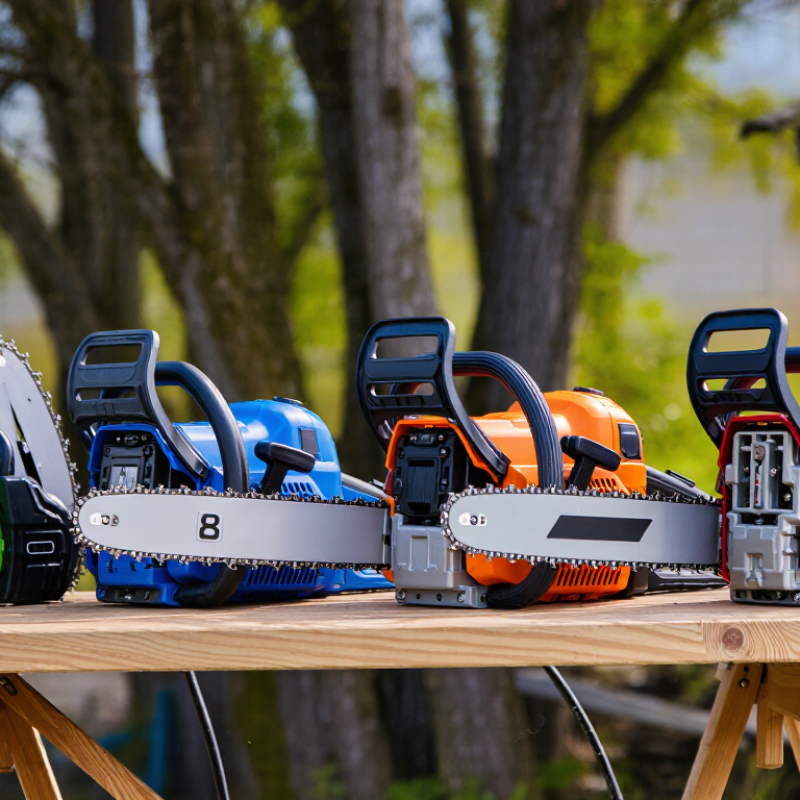
2026 Top Brushless Chainsaw Types: What Buyers Need to Know
What Defines a Brushless Chainsaw and How Its Motor Works
A brushless chainsaw replaces traditional carbon brushes with electronic switching. Its motor contains permanent magnets, copper coils, and a controller. The controller changes current timing as the rotor turns. This creates rotation without physical contact between brushes and a commutator.
That design reduces friction, heat, and brush wear. The motor stays cooler. Under a heavy cut, electronic control can deliver strong low-speed torque. It may also respond quickly when the chain enters dense wood. In practical use, this can make cutting feel smoother and reduce interruptions caused by worn brushes.
However, brushless does not mean maintenance-free. The chain still needs correct tension, sharp teeth, and steady lubrication. Dust, moisture, and impact can damage electronic components. A poorly matched battery may also reduce cutting time or trigger thermal protection. I have found that some buyers focus too much on the motor label and overlook chain speed, bar length, balance, and brake response.
A reliable comparison should examine the complete cutting system. Check whether the motor maintains speed under load. Inspect the oiling system and accessible tension adjustment. Listen for uneven operation. A quiet motor is useful, but it does not prove superior cutting performance. Real wood conditions often reveal differences that specifications hide.
| Brushless Chainsaw Type | Typical Guide Bar Length | Typical Power System | Motor and Control Characteristics | Best-Suited Applications | Main Buyer Advantages | Important Limitations |
|---|---|---|---|---|---|---|
| Compact Pruning Saw | 6–8 in (15–20 cm) | 18–21 V lithium-ion battery; approximately 2–4 Ah for common consumer packs | Small permanent-magnet synchronous or electronically commutated motor. A controller switches current through the stator windings without carbon brushes. | Pruning branches, cutting small limbs, garden maintenance, and occasional light-duty work. | Low weight, quick handling, low vibration, and convenient one-hand operation on models designed for it. | Limited cutting capacity, shorter operating time under heavy loads, and reduced suitability for large hardwood. |
| Light-Duty Cordless Chainsaw | 10–12 in (25–30 cm) | 18–36 V lithium-ion battery system; commonly 2–8 Ah depending on the platform | Brushless motor uses electronic commutation and can adjust torque and speed according to trigger input and load. | Small logs, storm cleanup, firewood preparation, and routine residential cutting. | Quieter operation than gasoline models, no fuel mixing, fewer wear parts, and zero tailpipe emissions during use. | Battery charging time, limited continuous runtime, and performance that can decline in cold conditions or at low charge. |
| Mid-Range Homeowner Chainsaw | 14–16 in (35–40 cm) | 36–60 V lithium-ion battery system; often 4–12 Ah, depending on the battery design | Higher-output brushless motor with feedback-based electronic control. The controller regulates current to maintain chain speed as cutting resistance changes. | Medium branches, small-to-medium logs, property maintenance, and seasonal firewood cutting. | Good balance of cutting capacity, lower maintenance, reduced noise, and smoother power delivery. | Battery and charger cost can be significant; sustained heavy cutting may require spare batteries. |
| High-Output Battery Chainsaw | 16–20 in (40–50 cm) | 36–80 V lithium-ion battery system; high-capacity packs may exceed 8 Ah | Large brushless motor and power electronics designed for high current. Electronic protection may reduce output during overload or excessive temperature. | Large residential trees, heavier storm debris, frequent firewood cutting, and demanding property work. | High torque potential, strong chain-speed recovery, less routine engine maintenance, and easier starting than gasoline equipment. | Higher weight, greater battery expense, heat buildup during prolonged cuts, and runtime limits under maximum load. |
| Top-Handle Professional Saw | 10–14 in (25–35 cm) | 18–36 V lithium-ion battery system; capacity varies by duty cycle and tool balance | Compact brushless drive with electronic speed control. Top-handle designs require careful handling and are intended for trained users in appropriate work positions. | Professional arboriculture, tree-crown work, and pruning from elevated work areas when permitted by safety procedures. | Compact form, reduced exhaust exposure, precise control, and lower noise in sensitive work environments. | Not a general-purpose ground saw; increased safety demands, shorter bar length, and limited suitability for large trunks. |
| Rear-Handle Professional Battery Saw | 16–20 in (40–50 cm) | High-voltage lithium-ion battery system, commonly 36–80 V | High-efficiency brushless motor paired with a digital controller, overload protection, thermal monitoring, and electronic braking. | Professional ground cutting, storm response, utility maintenance, and repeated medium-to-heavy work. | Strong torque, fast response, reduced routine maintenance, and more consistent power than brushed motor designs. | Battery logistics, charging infrastructure, weight distribution, and runtime management are critical for full-day use. |
| Pole Saw with Brushless Drive | 8–12 in (20–30 cm) | 18–60 V lithium-ion battery system | Brushless motor may be located near the cutting head or in the lower housing, with electronic control transmitted through the drive system. | Overhead pruning, branch removal, orchard maintenance, and cutting work from the ground. | Extended reach, lower exhaust exposure, and reduced maintenance compared with small gasoline pole saws. | Reduced maneuverability, limited cutting diameter, increased balance demands, and possible chain-oil access challenges. |
| Corded Brushless Chainsaw | 12–18 in (30–45 cm) | Single-phase mains electricity; commonly 120 V or 230 V depending on the region | Electronic motor control provides brushless commutation while continuous mains power removes battery runtime limits. | Home workshops, fixed outdoor areas, occasional cutting near a suitable electrical outlet. | Continuous operating time, consistent power availability, no battery charging, and lower energy-storage cost. | Power cord limits mobility and introduces a cut, trip, and weather-related safety hazard; outdoor use requires appropriate rated equipment. |
| Dual-Battery Brushless Chainsaw | 14–20 in (35–50 cm) | Two lithium-ion battery packs used together, often providing a higher system voltage or longer usable runtime | Controller balances current demand between packs and may limit output if pack voltage, temperature, or state of charge differs. | Longer residential jobs, firewood preparation, cleanup work, and applications requiring more sustained cutting. | Higher available power, improved runtime, and the ability to use a modular battery platform. | Greater total weight, two batteries needed for operation, longer charging requirements, and higher replacement cost. |
| Pole-Mounted or Fixed-Head Commercial Saw | 10–16 in (25–40 cm) | Battery or corded electric system, depending on the installation and work environment | Brushless motor is integrated into a specialized drive assembly, with electronic current control and mechanical chain reduction. | Specialized vegetation management, maintenance systems, and repetitive cutting operations with defined access conditions. | Repeatable operation, reduced engine servicing, and suitability for controlled work processes. | Less versatile than handheld saws and dependent on the specific mounting, access, and power arrangement. |